Living in Pocitos, Montevideo (2026): complete guide
INGAR · · Neighborhoods
Pocitos in one sentence (and why that's not enough)
Ask any Montevidean which is the most sought-after neighborhood in the city and the answer is almost always Pocitos. And it makes sense: the Rambla, services on every block, good connectivity, and a real estate supply that runs from investment studios to penthouses overlooking the Río de la Plata. But that same popularity creates traps for buyers and renters who search without knowing the neighborhood's internal differences.
In our experience working with buyers and sellers in Pocitos, most frustrations come from the same place: searching "in Pocitos" as if it were one thing, when in reality it's at least three or four different neighborhoods living under the same name. This guide helps you tell them apart, understand the real 2026 prices, and avoid the mistakes we see repeated week after week.
If you're evaluating a purchase, combine this guide with how to evaluate if a property price is fair and the checklist before buying a used property.
The three faces of Pocitos: sub-areas that change everything
Pocitos belongs to Municipio CH and borders Punta Carretas, Buceo, and Parque Batlle. But the experience of living half a block from the Rambla has nothing in common with living on Boulevard España or on the quiet streets behind 21 de Septiembre. To simplify, we divide the neighborhood into three sub-areas that in practice function as different neighborhoods.
Pocitos Playa (the coastal strip and the Rambla)
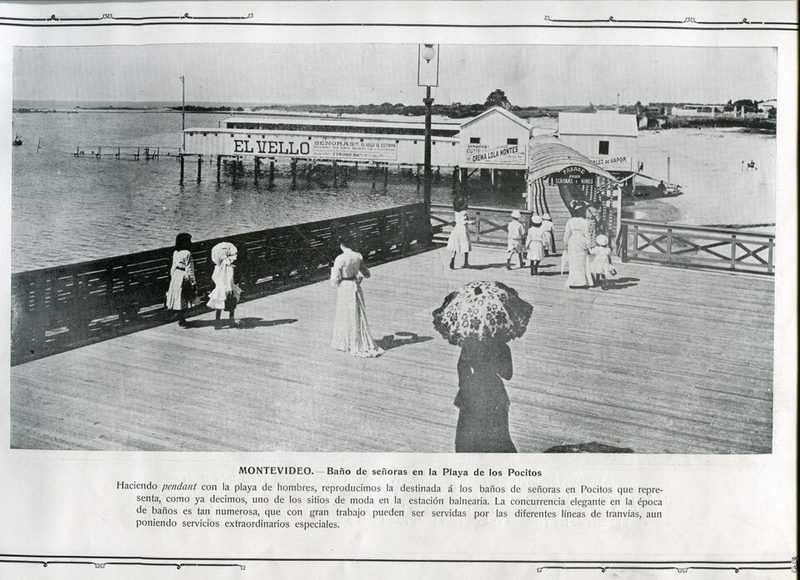
This is the zone that appears in every postcard: the curve of the beach, the 1.5 km of sand, the Rambla with joggers and cyclists at sunset. Living here means having Montevideo's finest public space right at your door. The Rambla bike lane — which already covers more than 4.7 km of infrastructure along the coastal stretch — is busy at all hours, and the beach functions as a plaza, open-air gym, and social hub.
What nobody tells you: the humidity and wind off the Río de la Plata batter facades and frames, especially on high floors with a southerly orientation. Many apartments from the 1960s and 70s on the Rambla have infiltration problems that owners downplay. In our experience, a professional inspection of frames and exterior walls pays for itself in the first season of southerly winds.
The average price here climbs above USD 4,000/m², and a 2-bedroom with sea views easily exceeds USD 300,000. It's the most coveted sub-area, but also the one that requires the most care when assessing the real condition of the building.
Pocitos Nuevo (WTC area, 26 de Marzo, Luis Alberto de Herrera)
This is the sub-area that has changed the most in the past 15 years. The World Trade Center complex — already with six towers, with the fifth under construction adding 20 floors and 35,000 m² — created a corporate hub that attracted new residential towers in the surrounding blocks. Walking along 26 de Marzo or the streets connecting to Luis Alberto de Herrera, you'll see a concentration of amenity-rich buildings that didn't exist a decade ago: pools, gyms, co-working spaces, communal BBQ areas.
The resident profile is different: young professionals, expats working in free-trade zones, couples without children who value amenities over square footage. Units tend to be smaller than in old Pocitos (40–60 m² for 1-bedrooms), but come with new finishes and higher HOA fees from the start.
A figure not many people mention: in buildings with lots of amenities, HOA fees can represent the equivalent of 2–3% of the unit's value per year. If you buy a studio at USD 120,000 with monthly fees of UYU 12,000, that's nearly USD 4,000 a year just in HOA fees. Before you fall in love with the pool, run the numbers with our HOA fees guide.
"Old" Pocitos / interior (residential streets)
This is the area that sits between the main avenues: the streets Benito Blanco, Buxareo, Martí, Pereyra de la Luz, Francisco Vidal. Here you'll find 4–8-story buildings from the 1950s, 60s, and 70s — many catalogued by the School of Architecture as part of "Modern Pocitos," an architectural heritage designed by Sichero, García Pardo, and Pintos Risso, among others.
The experience feels more like a real neighborhood: less noise, people know each other in the buildings, and finding street parking (while still difficult) is less chaotic than on the avenues. Apartments tend to be larger than in new towers — a typical 2-bedroom runs around 70–80 m² versus 55–65 m² in recent construction — but they need more attention regarding plumbing, electrical systems, and window frames.
Something we see often: buyers who fall in love with the generous floor plans and wide balconies of a 1965 building, without realizing that a serious renovation of bathrooms, kitchen, and utilities can cost USD 25,000–40,000. That figure needs to be in your budget from day one.
Sub-area comparison table
| Sub-area | Typical profile | Indicative USD/m² | Strengths | Weaknesses |
|---|---|---|---|---|
| Pocitos Playa (Rambla) | Families, retirees, those who prioritize the coast | USD 4,000–4,500 | Rambla, beach, views, high resale demand | Humidity, wind, Rambla noise, premium prices |
| Pocitos Nuevo (WTC) | Young professionals, expats, investors | USD 3,800–4,200 | New buildings, amenities, proximity to offices | High HOA fees, smaller units, less neighborhood identity |
| Old Pocitos / interior | Families, those seeking space and quiet | USD 3,400–3,800 | Generous floor plans, neighborhood feel, less noise | Buildings may need renovation, aging plumbing |
2026 prices: what it really costs to live in Pocitos
The overall neighborhood average is around USD 3,850/m² according to early-2026 market data, placing it among Montevideo's most expensive neighborhoods alongside Carrasco, Puerto del Buceo, and Punta Carretas. But that average hides an enormous range: an interior studio in a 1970s building might be USD 2,800/m², while a new 2-bedroom with sea views can exceed USD 4,500/m².
Price ranges by unit type (sale, 2026)
| Unit type | Typical size | Price range | Notes |
|---|---|---|---|
| Studio | 28–38 m² | USD 115,000–130,000 | High rental demand; watch HOA fees in new towers |
| 1-bedroom | 40–55 m² | USD 155,000–175,000 | Most liquid unit type in the neighborhood; garage adds significant value |
| 2-bedroom | 60–85 m² | USD 220,000–280,000 | Wide range depending on condition, floor, and location within the neighborhood |
| 3-bedroom | 90–130 m² | USD 380,000–500,000+ | Scarce in new towers; the best ones are in renovated classic buildings |
Rental: average rental values in Pocitos run around UYU 27,000–30,000/month for a 1-bedroom, placing it alongside Punta Carretas as the most expensive in Montevideo. Add HOA fees (UYU 6,000–15,000 depending on the building) and the total monthly cost can be significantly higher than the rent alone.
The "average" trap in a heterogeneous neighborhood
In Pocitos, using averages to assess a price is especially dangerous. A 2-bedroom on the Rambla in a new tower and another 2-bedroom on an interior street in a 1960s building can differ by USD 80,000–100,000, and both are "Pocitos." Our recommendation: always compare with 5–8 properties in the same sub-area, same unit type, and similar condition. If you need help with the methodology, we have a practical guide to evaluating prices.
Factors that move the real price (beyond square footage)
| Factor | Value impact | How to verify |
|---|---|---|
| Garage included | +USD 25,000–40,000 vs. without garage | Confirm dimensions, maneuverability, gate |
| Sea / Rambla view | +15–25% over comparable interior unit | Visit and confirm the view won't be blocked by future construction |
| Facing a noisy avenue | -8–15% vs. comparable interior-street unit | Visit during rush hour; check for double glazing |
| Original condition (unrenewed) | -10–20% + renovation cost | Get a renovation estimate before making an offer |
| High floor with balcony | +5–10% vs. lower floors | Check orientation and wind exposure |
The parking problem: let's be honest
If there's one thing that defines the daily experience of living in Pocitos with a car, it's parking. It's not a minor inconvenience — it's the factor that generates the most frustration and the one most buyers underestimate.
The situation is so critical that in 2025 Mayor Mario Bergara opened the debate about implementing paid parking in Pocitos and Punta Carretas, as already exists in Ciudad Vieja and Centro. In his words, before paid parking in those zones it was "practically impossible to park and circulate." Pocitos is reaching that same point.
Concrete figures you need to know:
- Near the Rambla: forget about street parking during daytime hours, especially on weekends and in summer. Demand far exceeds available spaces.
- Boulevard España and 21 de Septiembre: constant traffic, double-parking, and frequent fines. Living on these axes without your own garage is a recipe for daily stress.
- Interior streets: better than the avenues, but far from comfortable. If you arrive after 7 PM, you may drive several laps before finding a spot.
- Building garage: a garage space in Pocitos is priced between USD 25,000 and USD 40,000 to buy, or UYU 5,000–8,000/month to rent. Many classic buildings don't have enough garage spaces for all apartments.
Our recommendation: if you have a car, filter for a garage from day one. Don't leave that for "later." In our experience, it's the factor that blocks the most purchase decisions in Pocitos, and the one that generates the most regret when ignored.
The Rambla and the beach: what they actually add to your quality of life
Let's be direct: the Rambla is the number-one reason Pocitos is worth what it costs. It's not marketing — it's an exceptional public space that changes your daily routine in a way that's hard to grasp until you've lived it.
Pocitos beach is 1.5 km long and the Rambla bordering it is part of a coastal infrastructure running the length of the city. In the Pocitos stretch you'll find:
- Bike lane: part of Montevideo's nearly 80 km of cycling infrastructure, the coastal stretch is the most used in the city.
- Running: Pocitos is the hub of Montevideo's running community. The area around Plaza Gomensoro concentrates several training groups, and the Rambla offers a flat, safe circuit at any hour.
- Sunsets: it's not a cliché. The sunsets from the Pocitos Rambla, with the view toward Cerro and the bay, are a daily ritual for thousands of people. It's the kind of thing that turns an ordinary Tuesday into something more than a Tuesday.
- Outdoor social life: mate on the Rambla, fishing, walks, dogs off-leash on the sand. It's a space that functions as an extension of everyone's living room.
The downside: all of this generates congestion. In summer and on weekends, the Rambla is saturated with cars, pedestrians, and cyclists. And the coastal climate — wind, humidity, salt air — is real and affects both your hair and your building's facade.
Dining and commercial life: three corridors you need to know
Boulevard España
The most traditional axis. Here you'll find everything from classic parrillas to international restaurants, mixed with pharmacies, banks, and services. It's noisy, with heavy traffic, but it concentrates the highest density of shops in the neighborhood. If you live nearby, you run all your errands on foot. If you work from home, avoid an apartment with a window facing the boulevard.
21 de Septiembre
The corridor with the most personality. It combines dining — from Le Crêpier to more upscale options — terrace bars, bookstores, and design shops. By day it's a busy commercial axis; by night it transforms into the neighborhood's nightlife hub, with bars like Tranquilo Bar (on the corner with Roque Graseras for decades), Gallagher's Irish Pub, and several cocktail spots that refresh each season. If you like stepping out at night to eat or have a drink, this is your area. If you want silence at 2 AM, stay away.
José Ellauri and surroundings
Connects Pocitos with Punta Carretas and with Punta Carretas Shopping (technically in Punta Carretas, at José Ellauri 350, but a 10-minute walk from much of Pocitos). The mall offers more than 200 stores, cinemas, a supermarket, and a food court. In the surrounding blocks there's a growing dining scene aimed at a young professional crowd.
A day-to-day figure that matters: Pocitos has a density of supermarkets, pharmacies, and services that few Montevideo neighborhoods can match. Tata, Disco, Tienda Inglesa, 24-hour pharmacies, veterinarians, gyms — everything is a few blocks away regardless of where in the neighborhood you live. It's one of the most walkable neighborhoods in the city, and that has real value that price-per-m² analyses often don't capture.
Who lives in Pocitos? The neighborhood of the mix
Data from the 2023 Census confirms something you sense walking around: Pocitos has one of the highest proportions of single-person households or households without children in Montevideo. But that doesn't mean it's a neighborhood of singles. The reality is more nuanced:
- Young professionals: drawn by proximity to the WTC, free-trade zones, and the 21 de Septiembre nightlife. Many in studios or 1-bedrooms in new towers.
- Established families: usually in the larger apartments of old Pocitos, in buildings from the 1960s–70s. They value the nearby schools (Pocitos has good educational coverage) and the neighborhood's relative safety.
- Retirees: many have lived in Pocitos for decades and aren't going anywhere. They're in the classic buildings, know the doormen by name, and are part of the neighborhood's identity.
- Expats: Pocitos has become the default neighborhood for foreigners moving to Montevideo. Argentines, Brazilians, Europeans, and North Americans arriving for tax residency or technology jobs. Many start by renting and some end up buying. The co-living spaces that emerged in recent years target this profile.
More than 90% of households in Municipio CH have amenities such as air conditioning or streaming services, reflecting an upper-middle to high socioeconomic level. It's not an extreme-luxury neighborhood like parts of Carrasco, but a well-off neighborhood where high urban quality of life is the norm.
The "Pocitos bubble": a real phenomenon
There's a joke that's been circulating in Montevideo for years: "Pocitos people think Pocitos is an independent city-state." And there's some truth to it. The neighborhood is so complete in services, dining, entertainment, and green spaces that many residents go weeks without leaving a 15–20-block radius.
This isn't necessarily bad — in fact for many it's exactly what they're looking for — but it has practical implications:
- For buyers: the very high internal demand (Pocitos residents selling one apartment and buying another in Pocitos) sustains prices even when the general market softens. It's a neighborhood with its own liquidity.
- For investors: vacancy in Pocitos tends to be lower than in other coastal neighborhoods. The Pocitos tenant renews the lease because they don't want to leave the neighborhood.
- For families: children grow up with everything nearby — school, sports, friends, beach — but may develop a limited sense of the wider city. It's a minor point, but worth mentioning.
Transport and connectivity
Pocitos has one of the best public transport coverages in Montevideo. The main bus lines run along Boulevard España, 21 de Septiembre, Luis Alberto de Herrera, and the Rambla, connecting to Centro, Ciudad Vieja, Tres Cruces, and virtually any point in the city.
What works well:
- Excellent line frequency during working hours.
- Proximity to Tres Cruces Terminal (10–15 minutes by bus or car).
- The neighborhood is highly walkable: most services are within 10 blocks.
- The Rambla bike lane connects to the city's cycling network.
What doesn't work as well:
- Traffic on Boulevard España and 21 de Septiembre is heavy at peak hours. If you work in Ciudad Vieja, allow 30–40 minutes by car at rush hour.
- Few rapid transit options: no metro or BRT (bus rapid transit), and bus lines share lanes with general traffic.
- Constant traffic noise on main avenues, especially from motorcycles.
Old buildings vs. new towers: what nobody tells you
Buildings from the 1950s–70s ("Modern Pocitos")
- Pros: generous floor plans, wide balconies, good cross-ventilation, design by recognized architects (Sichero, García Pardo, Pintos Risso). Many have excellent structural quality that has aged well.
- Cons: original plumbing that may need complete replacement, electrical systems undersized for today's consumption, aging elevators with high maintenance costs, no garage or insufficient parking. HOA fees can be high due to constant repairs.
- Key: ask for the building's minute book to see what work has been done and what's pending. A building that replaced its plumbing and downpipes in the last 10 years is a much safer bet than one that has it pending.
New towers (2010 onwards)
- Pros: modern utilities, amenities, energy efficiency, garage, security. Fewer short-term maintenance surprises.
- Cons: smaller units at the same or higher price, elevated HOA fees for amenities (heated pool, gym, event room), more restrictive rules (pets, noise, use of common areas). And one point that's not minor: the construction quality of some recent developments doesn't match what they charge.
- Key: research the builder and developer. A lot has been built in Pocitos in recent years, not all with the same level of seriousness. Ask for references and look for reviews from residents in the developer's previous buildings.
Noise and traffic: the most underestimated factor
If there's one thing that separates a good experience from a bad one in Pocitos, it's noise. And we're not talking about subtle differences: the noise level between a front-facing apartment on Boulevard España and a rear-facing one on an interior street is the difference between sleeping well and wearing earplugs every night.
The noisiest zones:
- Boulevard España (constant traffic, buses, motorcycles).
- 21 de Septiembre (daytime traffic, bars at night).
- Rambla (vehicle traffic + wind on high floors).
- Luis Alberto de Herrera (heavy traffic at rush hour).
How to protect yourself:
- Visit the property during rush hour (Tuesday or Wednesday between 6–7 PM) and on a Friday night if it's close to 21 de Septiembre.
- Check whether it has proper double glazing (not decorative DVH, but real acoustic insulation).
- Ask about orientation: rear-facing onto an internal courtyard may be quieter but have less natural light.
- On high floors facing an avenue, noise rises (not falls as many people think), because there are no buildings to block it.
Who is Pocitos right for? (and who it isn't)
It will work well for you if:
- You want to live with everything solved within walking distance: supermarket, pharmacy, restaurants, gym, beach.
- You value the Rambla as part of your daily routine (running, walking, taking the dog out).
- You're looking for liquidity: Pocitos leads Montevideo's purchase (13%) and rental (12%) searches. If you need to sell or rent quickly, there's steady demand here.
- You're an expat and want easy integration: there's an international community, English-language services, and everything at hand.
It probably won't work for you if:
- Your budget is tight and you don't want surprises with HOA fees, parking, and total cost. In Pocitos, the "cheap" option always ends up costing more than it appears.
- You need to park at the door daily without your own garage. Every day. You'll suffer.
- You want absolute quiet and aren't willing to pay the premium for a rear-facing unit on an interior street.
- You're looking for the most square footage for the money: neighborhoods like Buceo, Parque Batlle, or Malvín will give you more m² for the same money, with a good quality of life. Read our Buceo guide for comparison.
Common mistakes we see every week
- Searching "in Pocitos" without defining a sub-area. It's like searching "in Montevideo." Define first: Rambla, new tower, or quiet interior? These are completely different searches.
- Ignoring HOA fees. A studio at USD 120,000 with monthly fees of UYU 12,000 is not cheaper than one at USD 130,000 with fees of UYU 5,000. Total monthly cost is what matters.
- Leaving the garage for "later." Garage spaces in Pocitos are scarce and expensive. If you need a car, make a garage a filter from day one.
- Buying in an old building without evaluating the utilities. The floor plans are tempting, but a building-wide plumbing replacement can generate a special assessment of thousands of dollars you weren't planning for.
- Falling in love with amenities without running the numbers. Pool, gym, and co-working sound great in the pre-sale. HOA fees of UYU 15,000–18,000/month don't sound so great in year three.
- Not visiting during rush hour. An apartment can seem charming on a Saturday at 10 AM and be unlivable on a Wednesday at 6:30 PM because of traffic noise.
Checklist for searching well in Pocitos
- Define sub-area according to your priority: Rambla / new tower / quiet interior.
- Decide whether a garage is a hard requirement (if you have a car, it probably is).
- Ask for HOA fees, breakdown, and whether there are pending works or planned special assessments: HOA fees guide.
- Visit at least two different times (including a weekday rush hour).
- If the building is pre-1980: ask about the condition of plumbing, elevator, roof waterproofing, and party walls.
- If it's a new tower: research the developer and ask for references from previous buildings.
- Calculate total monthly cost: payment/rent + HOA fees + parking + property tax + utilities.
- If it's a used property: use the questions checklist before buying.
- Compare with at least 5 similar properties in the same sub-area before making an offer.
Frequently asked questions
"Pocitos Playa or Pocitos interior?"
It depends on your lifestyle. If the Rambla is going to be part of your daily routine (running, walking, mate at sunset), the proximity to the coast is worth the premium. If you work from home and need quiet, the interior with a good rear-facing unit will give you a better quality of life for less money. There's no universal answer.
"Old building or new tower?"
Old building if you prioritize floor space, natural ventilation, and character, and you're willing to invest in renovation and tolerate not everything working perfectly. New tower if you prioritize zero initial maintenance, amenities, and aesthetics, and you're prepared for higher HOA fees and smaller square footage. In both cases, the quality of the specific building matters far more than generic age.
"Is it a good neighborhood for investment?"
Pocitos has the highest rental demand in Montevideo and low vacancy, which is excellent. But gross yields tend to be lower than in cheaper neighborhoods (Cordón, Parque Batlle), because purchase prices are proportionally higher. It's a safer but less percentage-profitable investment. For investment, a studio or 1-bedroom in the WTC area tends to have the best relationship between rental demand and entry price.
"Is it worth buying off-plan in Pocitos?"
It can be worth it if the developer is reliable and the pre-sale discount is real (not inflated). But be aware: in recent years there has been an oversupply of new towers with similar unit types (studios and 1-bedrooms), which can push prices down when they all deliver at the same time. Research how many projects are under construction in the same area before deciding.
"I'm being offered something on 21 de Septiembre — is it a good idea?"
It depends on your noise tolerance and lifestyle. 21 de Septiembre is Pocitos' most vibrant axis: commercial and intense by day, filled with bars and restaurants at night. If you're young and enjoy that energy, great. If you need quiet at night, a front-facing apartment on 21 probably isn't for you. Check whether it has real double glazing and visit on a Friday night before deciding.
Sources
- Municipio CH – Pocitos neighborhood (reference): municipioch.montevideo.gub.uy
- Municipio CH – Geographic boundaries (CCZ5): municipioch.montevideo.gub.uy
- Intendencia de Montevideo – Beaches and locations: montevideo.gub.uy
- Intendencia de Montevideo – Rambla bike lane: montevideo.gub.uy
- Faculty of Architecture (UdelaR) – Modern Pocitos catalogue: fadu.edu.uy
- InfoCasas / Mercado Libre Inmuebles – Market data 2025–2026
- Montevideo.com.uy – Debate on paid parking in Pocitos: montevideo.com.uy
Related articles
- Living in Buceo (Montevideo) in 2026: pros, cons, sub-areas and prices
- Living in Punta Carretas (Montevideo) in 2026: pros, cons, sub-areas and prices
- Living near the sea in Montevideo (2026): affordable areas, pros/cons and checklist
- HOA fees: what they include and how they are calculated
- How to evaluate if a property price is fair