Living in Ciudad Vieja, Montevideo (2026): Guide and Checklist
INGAR · · Neighborhoods
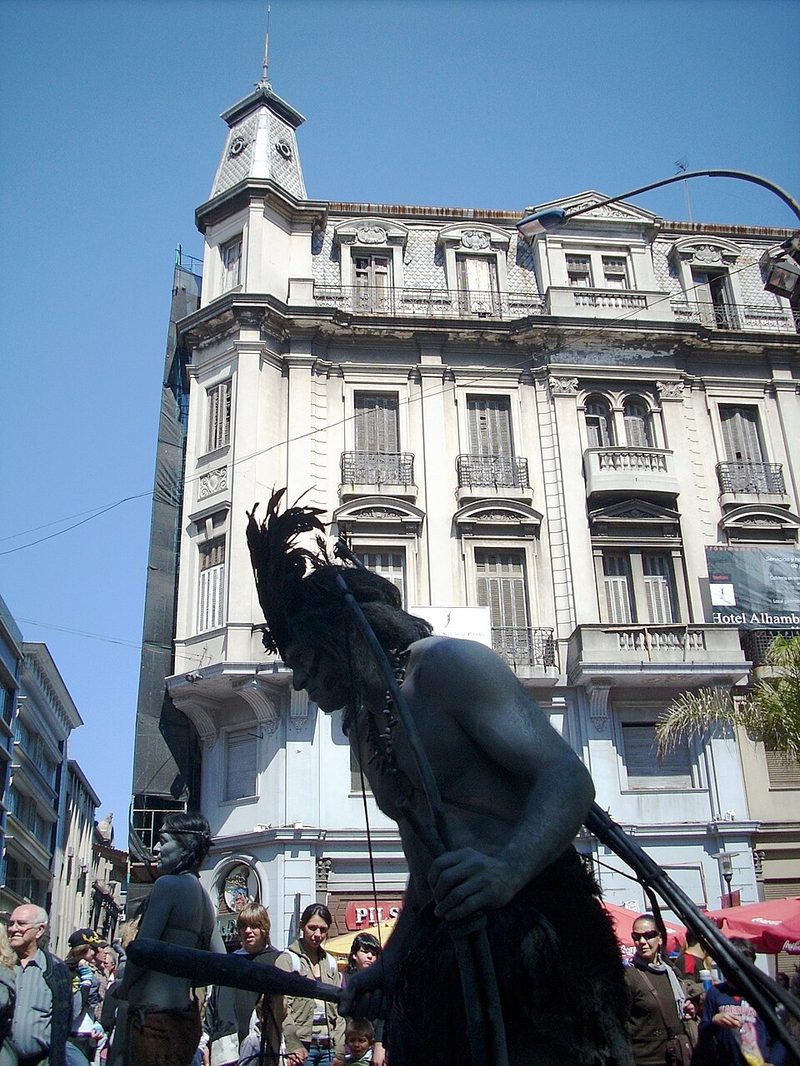
Ciudad Vieja in 2026: Montevideo's Most Fascinating and Contradictory Neighborhood
Ciudad Vieja is no ordinary neighborhood. It is Montevideo's ground zero — the original walled city founded in 1724 — and today a territory where restored colonial buildings coexist with crumbling facades, art galleries sit next to boarded-up shops, and the immaculate Teatro Solís stands just blocks from streets you'd rather avoid at night.
If you're considering living, investing or renting in Ciudad Vieja, this guide will give you the real information: sub-zones, prices, concrete risks of historic buildings, security without euphemisms, and a technical checklist so you don't get caught off guard.
The first thing you need to understand: in Ciudad Vieja, the experience changes radically from one block to the next. One city block can have a spectacular renovation with double-height lofts, and the next can have three abandoned buildings with squatters. Due diligence here is not optional — it is survival.
A Brief History That Explains the Present
Ciudad Vieja was the original Montevideo, laid out according to the Laws of the Indies with its perfect grid around Plaza Matriz. During the 19th and early 20th centuries, it was the country's financial and social center. The buildings from that era — neoclassical, Art Nouveau, Art Déco — are what give the neighborhood its character today.
But in the mid-20th century, the exodus began. Wealthy families moved to Pocitos, Carrasco, Punta Carretas. Offices migrated to the Centro and to the World Trade Center. Ciudad Vieja gradually emptied out. Buildings, without maintenance, deteriorated. Some were simply abandoned.
For two decades there has been a recovery process that accelerated sharply in 2024 with the Late Ciudad Vieja program from the Intendencia de Montevideo: 100% exemptions from property tax for up to 10 years for new construction and renovations, more flexible regulations to rehabilitate heritage buildings, and the incorporation of abandoned properties into the Land Portfolio. More than 225 units have been handed over to housing cooperatives, making Ciudad Vieja the neighborhood with the highest percentage of cooperative residents in Montevideo.
The result is a neighborhood in full transformation. And that, for those who know how to look, is an opportunity.
Sub-Zones: Sarandí Is Not the Same as the Port Area
Talking about "Ciudad Vieja" as a whole is a mistake. It's roughly 50 city blocks with very different realities. Here's the breakdown:
| Sub-zone | Profile | Pros | Cons |
|---|---|---|---|
| Pedestrian Sarandí and around Plaza Matriz | Tourism and culture, young professionals, digital nomads | Maximum walkability, galleries, cafes, Museo Torres García, street life | Weekend noise, street vendors, some rundown stretches past Pérez Castellano |
| Around Plaza Zabala | The neighborhood's most "premium" zone | Well-maintained buildings, Palacio Taranco, more residential feel | Limited supply, higher prices |
| Rambla 25 de Agosto and port area | Those who prioritize views and fresh air | Coastal promenade, port views, Mercado del Puerto steps away | Strong wind (facade humidity), truck traffic in the port zone, little nighttime activity |
| Around Plaza Independencia / Puerta de la Ciudadela | Border with Centro, heavy foot traffic | Maximum connectivity, Teatro Solís, Palacio Salvo as a neighbor | Not really a "neighborhood" — more of a transit zone, heavy vehicle noise on 18 de Julio |
| Interior streets (Washington, Colón, Cerrito) | Home office, relative calm | More accessible rents, less tourism | Some blocks with buildings in poor condition, less activity (watch out at night), more sporadic supply |
| Southern zone (Brecha, Reconquista, beyond Pérez Castellano) | Most deteriorated area | Low prices, long-term appreciation potential | Higher presence of people experiencing homelessness, abandoned buildings, lower perceived safety |
INGAR tip: Before closing any deal, walk the block during the day and at night. In Ciudad Vieja, the difference between a good and a bad investment can literally be crossing the street.
Architecture and Heritage: What's Wonderful and What's Complicated
Ciudad Vieja has the highest density of heritage buildings in Uruguay. You'll find everything from 18th-century colonial townhouses to Art Déco skyscrapers from the 1930s, spectacular Art Nouveau facades, and contemporary renovations with double-height spaces and exposed concrete.
What's Wonderful
- Marble floors, moldings, cedar woodwork in many original buildings — details that would be prohibitively expensive to replicate today.
- High ceilings (3 to 4 meters in many cases), ideal for lofts and spacious interiors.
- Protected facades that give the neighborhood a unique visual identity.
- Well-executed renovations that combine original structure with modern interiors — some of the most attractive properties in all of Montevideo.
What's Complicated
- Heritage status = restrictions. If a building is listed by the Comisión del Patrimonio, you cannot modify the facade, and in many cases not interior elements deemed to have heritage value either. This limits renovations and can make works more expensive.
- Load-bearing walls you can't touch. Unlike a modern building with an independent structure, many old buildings have structural walls. Opening up a space may be structurally impossible.
- Outdated installations. Lead pipes, electrical wiring without earthing, drainage made from materials no longer manufactured. Updating everything can cost as much as the renovation itself.
- Chronic damp. Party walls with no air gap, roofs with expired waterproofing membranes, foundations that absorb moisture from the ground. This is the number-one problem and the most expensive to resolve permanently.
If you're evaluating a purchase, we recommend combining this guide with our article on what to ask before buying a used property, which applies especially well to Ciudad Vieja.
Security: The Unfiltered Truth
We're not going to tell you Ciudad Vieja is unsafe and leave it at that — that would be unfair. We're also not going to say it's safe — that would be irresponsible. The reality is more nuanced and depends heavily on the zone and the time of day.
What's Happening in 2025–2026
Local business owners have publicly reported an increase in violent incidents, including situations where people experiencing homelessness enter restaurants, knife-related conflicts in front of shops, and street robberies. Hotel workers have stated that parts of the area "at night are no man's land."
In response, in 2026 the Centro de Comando Unificado was reactivated, an emergency beacon was inaugurated, and the police post at Sarandí and the Rambla was restored to 24-hour operation. The Ministerio del Interior announced specific measures for the neighborhood.
Practical Security Map
| Zone | During the day | At night |
|---|---|---|
| Pedestrian Sarandí (central stretch) | Calm, touristy, lots of activity | Acceptable until 10–11 pm; drops off significantly after that |
| Around Plaza Zabala | Fine, more well-maintained area | Relatively quiet |
| Rambla 25 de Agosto | Fine, open promenade | Few people; avoid dark areas near the port |
| Pérez Castellano southward | Variable, deteriorated areas | Avoid walking alone |
| Interior streets (Washington, Colón) | Generally fine | Depends on the block; some are very deserted |
| Bar zone (weekends) | Normal | Active until the early hours; possible alcohol-related conflicts |
Practical tip: If you're going to live in Ciudad Vieja, choose a building with a doorman or at least a secure entrance. Avoid ground-floor units with street-facing windows in less-trafficked areas. And if you have a bicycle, keep it indoors.
Culture and Dining: Here Ciudad Vieja Is Unbeatable
If there's anything that justifies living in Ciudad Vieja, it's the concentration of cultural and dining options. There is no other neighborhood in Montevideo that comes close in terms of density of choices per square meter.
Culture
- Teatro Solís: Inaugurated in 1856, it is the oldest theater in South America still in operation. Opera, ballet, the Filarmónica de Montevideo, Comedia Nacional. Programming year-round. If you live a few blocks away, you can walk to a performance and be home in 10 minutes.
- Museo Torres García: At Sarandí 683, inside an Art Nouveau building that was formerly the Broqua y Sholberg bazaar. More than 85,000 visitors per year. The work of Joaquín Torres García (constructivism) is national artistic heritage.
- Museo de Artes Decorativas (Palacio Taranco): An 1908 mansion on Plaza Zabala worth visiting for the interior architecture alone.
- Pedestrian Sarandí: Converted into a pedestrian street in 1992, it concentrates galleries, bookshops, antique dealers and street performers. Saturdays are especially lively.
- Espacio de Arte Contemporáneo (EAC): In the former Miguelete prison (on the edge of Ciudad Vieja), one of the most interesting contemporary art spaces in the region.
- Carnival: Candombe troupes parade through Ciudad Vieja during February. Las Llamadas follows a route through the neighborhood. If you don't like the sound of drums, keep this in mind.
Dining
- Mercado del Puerto: The temple of Uruguayan barbecue. Iconic grills such as Cabaña Verónica, El Palenque, La Posada. Not cheap (it's a tourist zone), but eating a rack of ribs in front of the grill with a glass of Tannat is an experience hard to replicate. Perfect for Saturday lunches.
- Café Brasilero: Founded in 1877, the oldest café in Montevideo. Eduardo Galeano used to write there. It still operates today with the same marble bar.
- Craft beer: The scene has grown considerably. Ciudadela Bar, Espacio Bilu Beer, The Shannon Irish Pub (with craft brands hard to find elsewhere). Thursday and Friday evenings from 7 pm onward it fills up.
- Auteur restaurants: Several young chefs have chosen Ciudad Vieja to open culinary concepts in renovated townhouses. The rent-to-appeal ratio is better than in Pocitos or Carrasco.
- Bar Facal: A Montevideo institution. Walls covered in vintage photos, artisanal grappas, the spirit of Montevideo from another era.
Nightlife: The Good and What You Need to Know
Ciudad Vieja has Montevideo's most active nightlife alongside Cordón/Parque Rodó. On Thursday, Friday and Saturday nights, the streets around Bartolomé Mitre, Pérez Castellano and surroundings fill with people.
The good: bars with personality, live music, tango venues, after-work gatherings that stretch into the early hours. An eclectic atmosphere (tourists, artists, office workers, digital nomads).
What you need to know if you live there: noise from Thursday to Saturday can be significant, especially in older buildings with single-pane windows (no double glazing). If your bedroom faces a street with bars, you'll hear everything. A critical factor that many buyers overlook and discover on their first weekend.
The Property Market: Numbers and Reality
General Overview (2026)
- Active stock: Approximately 605 properties for sale — relatively low compared to Pocitos, Cordón or Buceo.
- Average price: USD 2,000–2,400/m², but with enormous spread. You can find apartments at USD 1,200/m² in unrefurbished buildings and premium renovations at USD 3,000–3,500/m².
- New-build studios: From USD 77,000–82,000. One-bedroom from USD 94,000 in new projects.
- Existing apartments: From USD 50,000–72,000 for small units that need work.
Why Prices Are So Variable
In no other neighborhood in Montevideo is the price range so wide. The reason is simple: the condition of the building changes everything. A 60 m² apartment in a renovated building with a lift, concierge and amenities can be worth USD 180,000. The same floor area in a building with damp issues, no lift and unpredictable common charges might be at USD 75,000. And the second could end up costing you more once you factor in the necessary renovations.
Real Opportunity: The Late Ciudad Vieja Program
The current tax exemptions make investing in renovation more attractive than ever:
- 100% exemption from property tax and municipal charges for up to 10 years for new construction and renovations.
- If the project meets sustainability criteria (SuAmVi model), the exemption is extended by an additional 36 months.
- Exemption from the Adicional Comercial for 5 years for new businesses opening in the area.
- Exemption from the obligation to build parking for projects of up to 25 units (this significantly reduces construction costs).
For investors, this can mean a meaningfully better return than in other neighborhoods. But note: the exemption has deadlines for starting construction, so if you're interested, don't delay in consulting.
Investment for Tourist Rental (Airbnb)
Ciudad Vieja has the highest short-term rental demand in Montevideo (proximity to cruise ships, Mercado del Puerto, historic center). But before buying with Airbnb in mind:
- Check the building's co-ownership regulations. Many explicitly prohibit short-term rental or require assembly approval.
- Legal obligations: register with DGI, enroll in the Ministerio de Turismo's National Registry of Tourism Service Providers, comply with safety regulations (smoke detectors, fire extinguishers, signage).
- Competition is high: there is a lot of Airbnb supply in the area, which pushes prices down in the low season.
- Seasonality: January–March (summer) and October–November (cruise season) are the best months. May–August can be very slow.
Mobility and Parking: The Major Headache
Public Transport
Ciudad Vieja has excellent bus connectivity. More than 25 lines pass through the neighborhood (including the 116, 124, 125, 127, 133, 148, and several circular routes C1, C3). The STM system works well for getting to Cordón, Centro, Tres Cruces, and from there connecting to anywhere in Montevideo.
The stop at 25 de Mayo and Juncal is one of the main hubs. From the Ciudadela to Tres Cruces is about 20 minutes by bus.
The Problem with Cars
If you depend on a car, Ciudad Vieja will make your life difficult. The streets are narrow (18th-century colonial layout, remember), there are few parking spots, and the Late Ciudad Vieja program even exempts new projects from building parking. This means the situation is not going to improve.
- In-building garages: very scarce. If you need parking, make it a hard requirement from the very first search filter.
- Metered parking: on almost all streets, Monday to Saturday.
- Rush hour: traffic flow can be slow due to single-lane streets.
- Bicycle: a viable option (flat terrain) but with the problem of theft. You need to store it indoors.
The truth: Ciudad Vieja is designed for car-free living. If that doesn't work for you, this may not be your neighborhood.
Resident Profile: Who Lives in Ciudad Vieja Today
The neighborhood's demographics have changed considerably in recent years:
- Young professionals who work in Centro offices or in the neighborhood's financial institutions.
- Artists and creatives attracted by the (still) accessible rents and the cultural atmosphere.
- Digital nomads who take advantage of Uruguay's fast internet (the fastest in Latin America), co-working spaces and the digital nomad visa. Ciudad Vieja has spaces such as Sinergia Cowork and Espacio Serratosa in historic buildings.
- Cooperative residents from more than 225 units delivered through the Abandoned Properties program.
- Mid- and long-stay tourists in Airbnbs and short-term apartments.
- Vulnerable populations in some of the neighborhood's more deteriorated sectors.
It's a heterogeneous mix that gives the neighborhood its vitality, but it also explains coexistence tensions you won't find in Pocitos or Carrasco.
Technical Checklist for Visiting Properties in Ciudad Vieja
Ciudad Vieja requires a more demanding level of inspection than other neighborhoods. Use this list when you visit:
Structure and Damp
| Inspection point | What to look for | Red flag |
|---|---|---|
| Walls | Stains, bubbling paint, salt deposits at skirting-board level, musty smell | "It just needs a coat of paint" (no, it doesn't) |
| Ceilings | Circular stains, flaking plaster, signs of leaks | Recent water infiltration marks, even if freshly repainted |
| Roof terrace | State of the waterproofing membrane, drainage gradients, cracks | Standing puddles, membrane over 10 years old without renewal |
| Party walls | Damp on the wall shared with the neighboring building | Wall cold and damp to the touch, mold in corners |
| Foundations | Diagonal cracks in corners of doors/windows | Opening cracks (place a plaster crack monitor and check back in 15 days) |
Installations
| Inspection point | What to look for | Red flag |
|---|---|---|
| Electricity | Main board, circuit breakers, residual current device, earthing | Ceramic fuse boxes (original installation), exposed cables, two-pin sockets with no earth |
| Plumbing | Water pressure (open tap and flush toilet simultaneously), drainage | Visible lead pipes, persistent odors in bathroom/kitchen, stains on the ceiling of the floor below |
| Gas | Type of installation, ventilation in the water heater space | Water heater in enclosed space, deteriorated flexible connector, inadequate ventilation |
| Elevator | Year of installation, maintenance company, monthly cost | Original building elevator never modernized (replacement can cost USD 30,000–60,000 split among co-owners) |
Documentation and Costs
- Common charges: Request the last 12 months of bills. In Ciudad Vieja these can be high due to constant maintenance work. See our article on common charges: what they include and how they're calculated.
- Reserve fund: Ask how much has been accumulated and whether any approved works are pending. An empty reserve fund in a building from 1920 is a time bomb.
- Assembly minutes: Ask for the last three. They'll tell you what problems the building has and what works have been approved or rejected.
- Heritage status: Find out whether the building is listed by the Comisión del Patrimonio Cultural de la Nación. If it is, any works require additional approval.
- Co-ownership regulations: Review restrictions on use (short-term rental, commercial activities) before buying.
- If buying: Estimate closing costs using our guide on property purchase costs.
- If renting: Confirm what guarantee you'll be asked for using our guide on rental guarantees.
Pros and Cons: Summary for Making the Decision
In Favor
- Unrivaled concentration of culture and dining in Montevideo.
- Total walkability: you can live without a car.
- Lower entry prices than Pocitos or Cordón for similar floor areas.
- Real appreciation potential with the Late Ciudad Vieja plan incentives.
- Genuine architectural charm (not a 1990s building with fake French balconies).
- A diverse and interesting community.
- Active tax exemptions for those investing in renovation.
- First-class internet (fiber optic in most of the neighborhood).
Against
- Uneven security: some blocks are frankly difficult at night.
- Buildings with structural problems that can cost you more than you saved on the purchase price.
- Parking virtually non-existent.
- Nightlife noise Thursday to Saturday (and candombe drums during Carnival season).
- Heritage status limits the modifications you can make to your property.
- People experiencing homelessness in several sectors of the neighborhood.
- Wind and humidity near the Rambla (impacts on property maintenance).
- Common charges potentially high and unpredictable in old buildings.
Common Mistakes We See Repeated
- Buying for the charm of high ceilings without checking the structure. Those beautiful moldings may be covering chronic damp. Always get a technical inspection before making an offer.
- Not budgeting the real renovation cost. Renovating an apartment in Ciudad Vieja is not the same as painting and replacing the kitchen. Electrical and plumbing systems, damp treatment, windows: it can represent an additional USD 500–800/m².
- Ignoring extraordinary common charges. A building from 1910 can have a special levy of USD 3,000–5,000 per unit to repair the roof. Ask before buying.
- Buying with Airbnb in mind without reading the regulations. If the co-ownership regulations prohibit short-term rental, it doesn't matter how perfect the location is.
- Not considering parking. "I'll figure out where to leave the car" is a phrase you pay dearly for in Ciudad Vieja.
- Assuming all of Ciudad Vieja is the same. The difference between the block around Plaza Zabala and some interior streets is abysmal. Visit the area at night before signing.
INGAR's Verdict
Ciudad Vieja is the neighborhood with the greatest transformation potential in Montevideo in 2026. The tax incentives are real, tourist demand supports rental income, and there are properties with a price-to-character ratio you won't find anywhere else.
But it is a neighborhood that demands more work from the buyer or renter. Looking at photos on a listing portal is not enough: you need to walk the blocks, inspect buildings with a technical eye, read the regulations, and above all, understand that you are buying into a neighborhood that is still in the process of recovery. Some blocks have already arrived; others will take years.
If you do your homework properly, you can find one of the best quality-to-price deals in Montevideo. If you don't, you can end up with an apartment with chronic damp, no parking and a special common charge levy that no one warned you about.
From INGAR we can help you evaluate specific properties in Ciudad Vieja. We know the neighborhood block by block and can tell a real opportunity from a trap with pretty moldings. Contact us and let's talk.
Sources and References
- Intendencia de Montevideo - Ciudad Vieja Heritage Promotion Area
- Municipio B - Late Ciudad Vieja: Urban, Social and Environmental Rehabilitation
- El Observador - Measures by the IM to stimulate construction in Ciudad Vieja
- 970 Universal - Ciudad Vieja under pressure: security, housing and neighborhood complaints (2026)
- Infobae - Concerns in the historic center of Montevideo (2025)
- Junta Departamental de Montevideo - Exemptions and incentives for Ciudad Vieja
- Inventory of the architectural and urban heritage of Ciudad Vieja
- Municipio B - Ciudad Vieja District
- Wikipedia - Ciudad Vieja (Montevideo)