Living in Malvín and Punta Gorda, Montevideo (2026): a guide
INGAR · · Neighborhoods
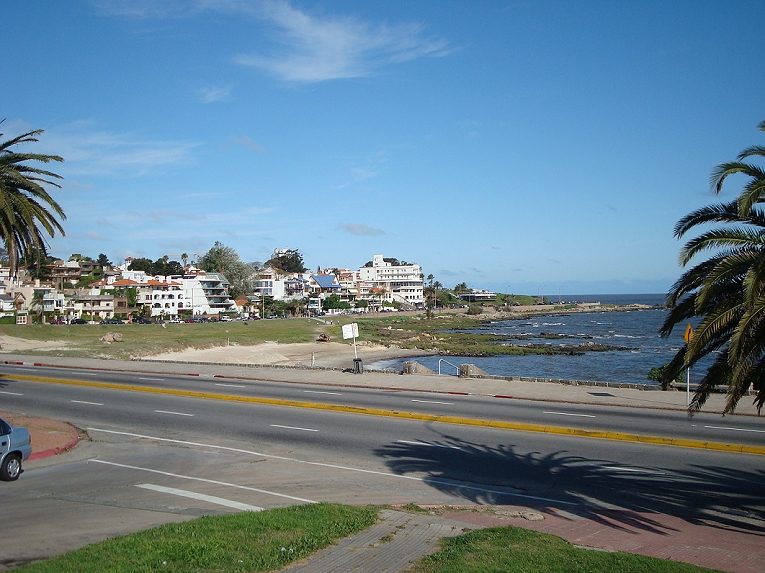
Malvín and Punta Gorda: two neighboring areas, two very different worlds
When someone says "I want to move to the Malvín area," the first thing we ask is: Malvín or Punta Gorda? Because although they share a border and the same rambla, the experience of living in one versus the other is radically different. The pace, the supply, the prices, and even dependence on a car all change from one neighborhood to the other.
In this guide we share what we know from direct experience working in the area: the real differences between Malvín and Punta Gorda, what to expect in each sub-zone, how prices look in 2026, and which profile suits each. No sugarcoating.
Location and boundaries: where each neighborhood begins and ends
Malvín stretches from Buceo (to the west) to Punta Gorda (to the east), with the Rambla to the south and Av. Italia as the northern reference. It's a wide neighborhood with a lot of internal variation: living on Rambla O'Higgins is nothing like living ten blocks away, past Rivera.
Punta Gorda occupies the peninsula jutting into the Río de la Plata between Malvín and Carrasco, separated from the latter by Avenida Bolivia. It is a geographically small neighborhood, wedge-shaped, ending at the famous Plaza Virgilio (officially Plaza de la Armada). That "point" shape gives it its name and, incidentally, its character: streets that dead-end at the coast, little through traffic, and a sense of residential enclave you won't find anywhere else in Montevideo.
Malvín: a neighborhood identity with a coastline
What makes Malvín different
Malvín retains something Pocitos has been losing over the years: neighborhood identity. There are families who have lived there for three generations, sports clubs with history, corner stores that still operate, and a block-life culture that has disappeared in more vertically developed neighborhoods. The development of social, educational, and public-space institutions has shaped a Malvinense identity you feel when you walk its streets.
Malvín's rambla is wider and less congested than Pocitos's. On weekends it fills with people, yes, but it doesn't have the permanent bottleneck of Rambla República del Perú. You can walk, bike, or simply sit on the steps facing the sea without feeling like you're in a traffic corridor.
Malvín beach
Playa Malvín is one of the seven Montevideo beaches certified under the ISO 14001 environmental management standard. It has three active lifeguard stations in season and accessibility via a concrete ramp from Rambla O'Higgins at the level of Hipólito Yrigoyen. The sand is good, the beach arc is wide, and when the water is clean (the city monitors quality weekly in season) it's one of the best options on Montevideo's coast.
That said: not every day is ideal. As with the entire Montevideo coast, after heavy rain water quality can drop. In the 2025–2026 season, departmental beaches remained open 100% of days between November and January, which is a good indicator.
The Malvín sub-zones that matter
This is a key point that many real estate listings overlook. Malvín is not a homogeneous neighborhood:
- Coastal Malvín (south of Rivera): the blocks between the Rambla and Av. Rivera concentrate the best of the neighborhood. Houses with gardens, mid-rise buildings, good tree coverage, and direct coastal access. This is the most expensive and most sought-after zone.
- Malvín along commercial corridors: the streets with shops (mainly along Rivera and some cross streets) have more movement, more noise, and more walkable services. If you prioritize not needing a car for everything, this zone works.
- Malvín Norte: technically a separate neighborhood, but many listings say "Malvín" when they really mean Malvín Norte (north of Av. Italia). The character changes completely: more public housing complexes, less classic residential, noticeably lower prices. If you're offered something "in Malvín" at a price that seems too good, check the exact address.
Punta Gorda: Montevideo's residential enclave
A neighborhood without shops (and that's intentional)
Punta Gorda is, along with Carrasco, one of the most exclusive areas of Montevideo. But unlike Carrasco — which has Carrasco Polo and a commercial corridor along Arocena — Punta Gorda has virtually zero commercial activity. No large supermarkets, no shopping centers, no trendy bars. There are houses, gardens, trees, and silence.
This is a pro or a con depending on what you're looking for. If you want to go out for a walk and only cross paths with a neighbor walking their dog, Punta Gorda is ideal. If you need to buy something at 10pm, you'll have to get in the car. The nearest shopping centers are Punta Carretas Shopping and Portones, both several minutes away by car.
Architecture and urban form
What visually distinguishes Punta Gorda is the near-total absence of high-rise buildings. Single- and two-story houses predominate, many with front setbacks, generous gardens, and usable backyards. There are some newer low-rise constructions (three or four floors), but nothing resembling the towers of Pocitos or Buceo.
This has practical consequences: available stock for sale or rent is very low. In Malvín you can find more than 3,700 active listings at any given time; in Punta Gorda, barely around 320. When something good comes up, it goes fast.
Plaza Virgilio and the Punta Gorda rambla
Plaza de la Armada (which everyone still calls Plaza Virgilio) is the neighborhood's symbolic heart. Perched on a cliff with a panoramic view of the Río de la Plata, it is one of the most beautiful spots along the entire Montevideo rambla. The bronze monument by sculptor Eduardo Díaz Yepes, dedicated to marines who fell in service, gives it a solemn air that contrasts with the informality of the rest of the coast.
Punta Gorda's rambla (Rambla O'Higgins and Rambla República de México) connects the beaches of los Ingleses and Playa Verde, both smaller and less crowded than Playa Malvín. They are more neighborhood beaches than visitor beaches.
Molino de Pérez: heritage on the border
On the boundary between Malvín and Punta Gorda, beside the Malvín stream, stands the Molino de Pérez, declared a National Historical Heritage site in 1975. It is one of the few 18th-century civil structures preserved in Montevideo. The Parque Baroffio surrounding it, inaugurated in 1956 as a public space, was reopened in 2023 with a renewed cultural program. It's a worthwhile outing that few Montevideans know well.
Direct comparison: Malvín vs. Punta Gorda
| Aspect | Malvín | Punta Gorda |
|---|---|---|
| Character | Neighborly, active, mixed profiles | Exclusive, quiet, strongly residential |
| Housing type | Houses + mid/high-rise buildings | Predominantly houses, low-rise buildings |
| Average sale price/m² | ~USD 3,500/m² | USD 3,500–4,000+/m² |
| Available stock | ~3,700 active listings | ~320 active listings |
| Walkable shops | Good along main corridors | Almost nonexistent |
| Car dependence | Medium (depends on sub-zone) | High |
| Parking | Easier than Pocitos | Very easy (quiet streets) |
| Public transport | Acceptable (lines 142, 306, D11, 64) | Limited (lines 2, 60, D11) |
| Typical profile | Families, professionals, young couples | Established families, senior professionals, retirees |
| New construction | Moderate (less than Buceo/Cordón) | Very little (regulation + neighborhood character) |
Prices in 2026: what to expect
Malvín
The average sale price in Malvín hovers around USD 3,500/m², placing it below Pocitos, Punta Carretas, and Carrasco, but above Montevideo's overall average. Malvín was one of the neighborhoods with the highest year-on-year price growth: according to 2025 market data, rents grew 14.8% year-on-year, second only to Buceo.
Some indicative sale price examples:
- Studio (30–35 m²): from USD 80,000–110,000. Cheaper than an equivalent studio in Pocitos.
- 2-bedroom (60–80 m²): USD 150,000–265,000 depending on condition, floor, and proximity to the rambla.
- 3-bedroom (80–110 m²): USD 200,000–320,000. Renovated coastal units command significantly more.
- Houses: highly variable, from USD 200,000 (needs work, away from coast) to over USD 500,000 (renovated, near the rambla).
Punta Gorda
Punta Gorda is one of three Montevideo neighborhoods where the average price per m² exceeds USD 4,000, alongside Carrasco and Punta Carretas. In practice, houses (the majority of supply) move in wide ranges:
- Apartments (scarce): USD 3,100–3,500/m² in existing buildings.
- Houses: from USD 2,200/m² (large lot, house to demolish or fully renovate) to over USD 4,500/m² for well-maintained coastal properties.
- Land: scarcity of supply means lots are in high demand. If a plot appears in Punta Gorda, it doesn't stay listed for long.
The most important data point about Punta Gorda is low turnover. With just 320 active listings versus Malvín's 3,700, we're talking about a market ten times smaller. That means you can't afford to "wait and see what comes up" for months: when something comes in at a good price, you need to move quickly.
Who each neighborhood suits
Malvín is right for you if:
- You have school-age children. The area has a strong educational offering: Colegio y Liceo John F. Kennedy (from preschool through high school), Liceo Federico García Lorca, Colegio Gabriela Mistral, Colegio Horacio Quiroga, and Colegio Nuestra Señora de Lourdes, among others. You don't have to cross the city to take the kids to school.
- You want a coast but also walkable services. In sub-zones along the commercial corridors you can handle most daily errands on foot.
- Your budget doesn't stretch to Punta Gorda or Carrasco but you don't want to give up coastal quality of life.
- You work from home and need a quiet neighborhood but with options nearby when you go out for lunch or need a coffee.
- You value neighborhood life: knowing your neighbors, having a regular corner store, saying hello to people on the rambla.
Punta Gorda is right for you if:
- You prioritize absolute quiet and privacy. No through traffic, no nightclubs, no constant new construction.
- You have a car (or two). Without a car, Punta Gorda gets complicated. Public transport is limited (lines 2, 60, and D11, with frequencies that fall short of Pocitos standards) and there are no shops around the corner.
- You're looking for a house with a garden in a consolidated area where no one is going to build a tower next door.
- Your budget allows for it. Punta Gorda is not a neighborhood where you can "buy in cheap." Entry-level prices are high and stock is so low that negotiation has less room.
- You're at a more settled stage of life: grown children, an established career, or an active retirement with a desire to walk along the rambla every day.
Mobility: what nobody tells you
One of the points people moving to this area most underestimate is transport and travel times.
- Getting to Centro or Ciudad Vieja: at rush hour, from Malvín via Av. Italia or Rivera you can spend 30–45 minutes by car. From Punta Gorda add another 10 minutes. By bus, allow 50–70 minutes depending on the line.
- Parking: in Malvín it's noticeably easier than in Pocitos. In Punta Gorda it's simply not an issue: there's always street parking available.
- Useful lines: line 64 connects Punta Gorda and Malvín with Centro via Buceo, Parque Batlle, and Tres Cruces. D11 and DM1 serve the coastal route. But frequencies don't match those of the main corridors.
- Bicycle: the rambla is an excellent cycling corridor all the way to Pocitos/Parque Rodó. But to get to Centro you have to climb via Rivera or Italia, which don't have comfortable cycling infrastructure.
Green spaces and recreation
The area has good green spaces, though they aren't Montevideo's most famous:
- Malvín and Punta Gorda rambla: the area's main public space. Kilometers of coastal walkway for strolling, jogging, cycling, or simply sitting.
- Parque Baroffio / Molino de Pérez: a historically rich park, ideal for a family outing. The Molino de Pérez, restored and with a cultural program, adds value few Montevideo parks can offer.
- Plaza Virgilio: Punta Gorda's viewpoint. Panoramic view of the river, benches, and one of the city's most beautiful sunset vistas.
- Playa Malvín: the area's main beach, with lifeguards and accessibility. Playa de los Ingleses and Playa Verde (in Punta Gorda) are smaller and quieter.
What you won't find nearby
There are things this area doesn't have, and it's worth knowing before deciding:
- Shopping centers: there are none in Malvín or Punta Gorda. The nearest ones are Punta Carretas Shopping (15–20 minutes by car) and Portones Shopping (similar distance). If you shop frequently, you'll notice the difference.
- Varied dining: Malvín has options along the rambla and certain corridors, but it's not the Pocitos rambla or Ciudad Vieja. Punta Gorda has no dining supply whatsoever.
- Nightlife: this is not Cordón or Pocitos. If you're looking for bars and a scene, you'll have to travel.
- Massive new construction: unlike Buceo or Cordón, the area has no tower boom. There are occasional developments in Malvín, but Punta Gorda has practically no new construction. If you're looking for a brand-new apartment with modern building amenities, supply is limited.
Common mistakes when searching in the area
- Confusing "Malvín" with "Malvín Norte." Malvín Norte is north of Av. Italia and is a neighborhood with a completely different socioeconomic and urban profile. Some listings say "Malvín" when they actually mean Malvín Norte. Always check the exact address.
- Not calculating the true cost of living in the area. The price per m² is just one part. Add common expenses (which can be high in Malvín buildings with security and a pool), property taxes (Contribución Inmobiliaria), a garage (essential in Punta Gorda), and fuel if you work far away. To understand these costs well, see our guide on property purchase expenses.
- Not visiting at different times of day. A Malvín street can be quiet at 3pm and noisy at 7am with commuter traffic. Visit the property during rush hour, at night, and on a weekend.
- Underestimating coastal humidity. Living close to the rambla has maintenance costs: aluminum frames deteriorate faster, exterior paint lasts less, and if windows aren't good quality you'll get indoor humidity. Always ask about the condition of frames and insulation.
- Assuming Punta Gorda is "the same but more expensive." It's not just a price difference. It's a neighborhood with a different lifestyle. If you need shops nearby, frequent public transport, or an active social life, Punta Gorda is not for you — regardless of whether you can afford it.
Checklist for deciding between Malvín and Punta Gorda
Before making a decision, answer these questions:
- Do you need walkable shops and services? If yes, Malvín (along commercial corridors) is the better option.
- Do you have a car? If not, rule out Punta Gorda.
- How much time do you spend on the coast? If the rambla and the beach are part of your daily routine, prioritize coastal proximity in either neighborhood.
- Are you looking for a house or an apartment? If it's a house with a garden, Punta Gorda has the best supply (if the budget allows). If it's an apartment, Malvín has far more variety.
- How much are you prepared to spend? Define your total budget (including common expenses and garage) before you start looking. Read our guide on common expenses to estimate properly.
- Are you renting? Confirm your guarantee situation before reserving: rental guarantees in Uruguay.
- Are you comparing with other coastal neighborhoods? Also read our guide on living near the sea in Montevideo for the full picture.
Methodology for comparing prices without smoke and mirrors
If you've already defined a zone and are comparing properties, use this comparables methodology:
- Select 5–10 similar properties in the same sub-zone (not just "same neighborhood": it has to be the same zone within the neighborhood).
- Calculate the price per m² for each one.
- Adjust for key variables: condition (original vs. renovated can mean a 20–30% difference), garage included or not, floor (high floors with sea views command more), and orientation.
- Discard the extremes (the most and least expensive usually have something particular skewing the comparison).
- The resulting range is your benchmark. If what you're being offered falls within that range, the price is reasonable. If it's above, ask for justification. If it's well below, ask yourself why.
For a deeper dive into this method, we have a complete guide: how to evaluate whether a property's price is fair.
Our view as a real estate agency
Malvín is one of Montevideo's neighborhoods with the best quality-of-life-to-price ratio. It has a coast, it has neighborhood character, it has services, and it has identity. It's not the cheapest neighborhood in the city, but it offers something that pricier neighborhoods like Pocitos have already lost: the feeling of living somewhere with history and community.
Punta Gorda is something else. It's for those who seek privacy, quiet, and a purely residential environment, and are willing to pay for it (and to depend on a car). It's not for everyone, and that's precisely what makes it attractive for those who do choose it.
If you're looking for a property in either of these neighborhoods, talk to us. We know the area block by block and can help you find what you truly need, without wasting your time on properties that don't fit your profile.
Sources
- Municipio E - Malvín (neighborhood reference): municipioe.montevideo.gub.uy
- Municipio E - Punta Gorda (neighborhood reference): municipioe.montevideo.gub.uy
- Intendencia de Montevideo - Beaches and water quality: montevideo.gub.uy/playas
- Infocasas - Market report and m² prices: infocasas.com.uy
- El Observador - Montevideo real estate market: elobservador.com.uy
- Plaza Mayor - Barrio Malvín: plazamayor.com.uy
- Wikipedia - Punta Gorda (Montevideo): es.wikipedia.org
Related articles
- Living near the sea in Montevideo (2026): affordable zones, pros/cons, and checklist
- Best areas for families with children in Montevideo (2026): criteria and shortlist
- How to evaluate whether a property's price is fair (2026): comparables and checklist
- Requirements for renting in Montevideo
- Property purchase expenses in Uruguay