Why foreigners choose Uruguay: what the data says in 2026
INGAR · · International
Short answer
Foreigners choose Uruguay mainly for stability and quality of life: that is what 80% of foreign companies and 63% of foreign workers surveyed by Uruguay XXI say; their main complaint is the cost of living. 57% of immigrants live in Montevideo, and Maldonado is where they weigh the most (5.7% of the population). Since 2026, anyone who lives in Uruguay more than 183 days a year can access the tax holiday of up to 11 fiscal years without investing.
Already know where you want to live or invest? We send you comparables in Montevideo, the Costa de Oro or Punta del Este and help you shortlist properties before you travel; see also our services for foreigners. Message us on WhatsApp with the area, your budget in dollars and whether you will live there or rent it out.
What the surveys say
Three surveys, of different groups:
| Who was asked | What they answered | Scope |
|---|---|---|
| Foreign companies operating in Uruguay (Uruguay XXI, 2023; 235 responses) | About 80% named macroeconomic, political and social stability; 71%, institutional and legal certainty; 47%, tax incentives; 44%, freedom to exchange currency and repatriate dividends. | Multiple answers allowed. Report in English, p. 9. |
| Immigrants (CERES, 2020; 1,153 participants, mostly online) | 26% came mainly for quality of life and 14% for a confirmed job offer. Difficulties with employment and red tape also came up. | CERES notes that the sample does not represent all immigrants. |
| Foreign workers in global services (Uruguay XXI, 2023; 600 people at more than 75 companies) | 63% highlighted quality of life once settled; the cost of living topped the negatives. | Uruguay XXI. |
The institutional data backs this up: the World Justice Project ranked Uruguay 23rd of 143 countries in its 2025 Rule of Law Index and 1st of 32 in Latin America and the Caribbean. On order and security it drops to 82nd globally (11th in the region): safety is assessed block by block, as explained in is it worth living in Uruguay?.
Where they settle and where people buy
According to the 2023 Census
The MTSS and Udelar analysis of the 2023 Census (February 2026) shows where the foreign-born population lives:
- Montevideo: 57% of immigrants (versus 37% of people born in Uruguay).
- Canelones: 14.7%.
- Maldonado: 9.8%. It is the department where immigration weighs most on its own population: 5.7%, and almost half (48.2%) arrived between 2018 and 2023.
How many there are and which countries they come from is covered in how many foreigners live in Uruguay and where people moving to Uruguay come from.
According to property sales
The Uruguay XXI real estate report (June 2026), with INE data, splits 2024 property sales like this: Montevideo 35%, Maldonado 17% and Canelones 14%; Rocha and Colonia, 5% each. That figure does not distinguish the buyer's nationality.
If you are torn between the capital and the coast, compare in Montevideo or Punta del Este: where to live and in living year-round in Maldonado and Punta del Este. If Colonia interests you, read what Praxis announced and what remains to be confirmed.
What a m² costs in Montevideo
The INGAR Index for August 2026 publishes asking prices by neighborhood. The median of the neighborhood medians is USD 2,768/m² for apartments and USD 1,246/m² for houses, but the range is wide:
| Neighborhood (apartments) | Asking USD/m² |
|---|---|
| Cerro | 1,049 |
| Colón | 1,063 |
| Maroñas | 1,143 |
| Carrasco | 4,375 |
| Parque Rodó | 4,386 |
| Villa Biarritz | 4,405 |
These are asking prices, not closing prices or appraisals. The Index does not cover Canelones or Maldonado: for the Costa de Oro or Punta del Este you need dated local listings.
On top of the price, add ITP (property transfer tax: 2% of the lower of the updated Catastro value and the price), the escribano (notary) and the agent's commission: try it in the purchase cost calculator. The rest of the monthly budget (rent, electricity, transport, mutualista, a private health provider) is in what it costs to live in Uruguay.
The 2026 tax regime: two paths to the tax holiday
Buying does not give you immigration or tax residency; they are three separate things, explained in does buying property give you residency? and in legal residency, tax residency and citizenship.
For anyone who becomes a tax resident from January 1, 2026, art. 24-BIS of Title 7 lets you opt to pay IRNR (non-resident income tax) on capital income from foreign entities (interest, dividends) and on gains from selling those assets, for the year of the change and the ten following years: up to eleven fiscal years. In practice, that foreign income pays no tax in Uruguay during that period.
There are two main paths:
- Live in Uruguay more than 183 days a year. Anyone who meets that test (art. 2, lit. A, of Title 7) in each fiscal year can opt in without investing anything. It is the path for people who really move.
- Invest more than 12,500,000 UI (unidades indexadas, ≈ USD 2 million) in real estate. Decreto 188/026 requires urban properties bought from 2026 on, separate from those used to qualify for tax residency by investment. In departments without a coastline, such as Lavalleja, the cost counts 50% more. It is the path for people who do not stay 183 days.
Two more conditions:
- You must not have been a tax resident in Uruguay in the two previous fiscal years, which matters for Uruguayans returning home.
- The 3.5 million UI in real estate plus 60 days test makes you a tax resident, but on its own it does not qualify you for the tax holiday.
The dated conversion to dollars and what happens after the eleven fiscal years are covered in 2026 tax residency for Argentines. Before moving capital, ask a tax advisor for a simulation of your case.
Which decision follows for your profile
| Your profile | What the data shows | What to do first |
|---|---|---|
| You are moving with family or remote work | Montevideo concentrates services and 57% of immigrants; with more than 183 days, the tax holiday requires no investment. | Rent for a year before buying and follow the guide to moving to Uruguay. |
| You are buying to rent out without moving | You are taxed as a non-resident; the tax holiday by investment requires about USD 2 million. | Compare neighborhoods with the INGAR Index and check whether vivienda promovida (promoted housing) applies. |
| You want the coast and a second home | Maldonado accounts for 17% of sales and the highest share of immigrants. | Separate personal use from rental income: seasonal rentals in Punta del Este. |
| You are coming from Brazil | Mercosur residency and the social security agreement change the math. | Read where to live in Uruguay if you come from Brazil. |
| You are buying land or a chacra | Ley 18.092 limits ownership of rural land by companies. | Check the padrón (cadastral parcel number) in rural padrones and the ownership structure with your escribano. |
Frequently asked questions
Why do foreigners choose Uruguay to live?
In official surveys, the most cited reason is stability: about 80% of foreign companies highlighted it (Uruguay XXI, 2023), and 63% of foreign workers in global services valued the quality of life. In the CERES survey, 26% of immigrants came mainly for quality of life. The cost of living is the most frequent complaint.
Can I access the tax holiday without investing in Uruguay?
Yes. Since 2026, anyone who becomes a tax resident and stays more than 183 days in Uruguay in each calendar year can opt to pay IRNR on their foreign capital income for the year of the change and the ten following years, without the 12,500,000 UI investment. The condition is not having been a tax resident in the two previous fiscal years.
Which departments do foreigners live in in Uruguay?
According to the MTSS and Udelar analysis of the 2023 Census, 57% of immigrants live in Montevideo, 14.7% in Canelones and 9.8% in Maldonado. Maldonado is where immigration weighs most on the department's population: 5.7%, and almost half of those immigrants arrived between 2018 and 2023.
How much does a square meter cost in Montevideo in 2026?
The INGAR Index for August 2026 gives a median asking price of USD 2,768/m² for apartments and USD 1,246/m² for houses. Across neighborhoods, apartments range from USD 1,049/m² in Cerro to USD 4,405/m² in Villa Biarritz. These are asking prices: the final price is negotiated and depends on the condition, the floor and each unit's building fees.
Can a foreigner buy property in Uruguay without residency?
Yes. Ley 16.906 gives domestic and foreign investors equal treatment, and you do not need residency to buy an urban home. What banks and escribanos do ask for is documentation of the source of funds. The exception is companies buying rural land, which fall under Ley 18.092.
Further reading:
- Is it worth living in Uruguay? Pros, cons and costs
- Does buying property give you residency in Uruguay?
- Investing in Uruguay: data and tools
- Real estate services for foreigners
Sources
- Uruguay XXI, survey of foreign companies (2023), p. 9, survey of foreign workers in global services and 2025 real estate report (June 2026), p. 27.
- CERES, survey of immigrants (2020).
- MTSS and Facultad de Ciencias Sociales (Udelar), Recent immigration in Uruguay 2022–2024 (February 2026).
- World Justice Project, Rule of Law Index 2025, Uruguay country profile.
- IMPO, Title 7, art. 24-BIS, Title 7, art. 2, Decreto 188/026, Ley 16.906 and Ley 18.092.
- INGAR, August 2026 Index (updated September 8, 2026).
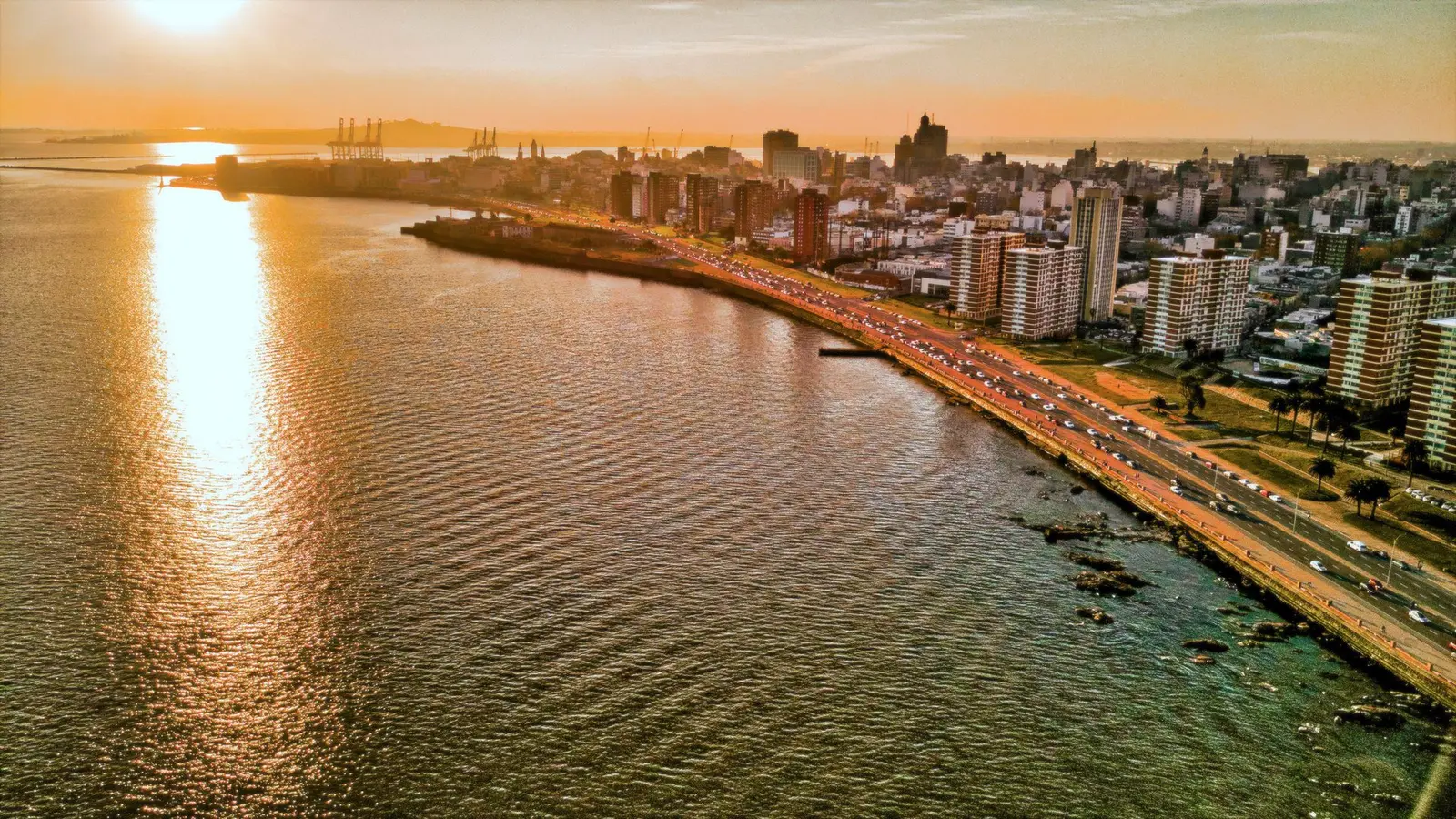
General information reviewed against official sources available as of September 26, 2026. Each survey keeps its own population and year; INGAR Index prices are median asking prices, and each person's tax situation should be simulated by a tax advisor. Cover photo: Marcelo Campi, CC BY-SA 2.0 license, via Wikimedia Commons.
