Ciudad de la Costa in 2026: Neighborhoods, the Commute, and the Honest Trade-Offs
The short version
Ciudad de la Costa isn't a neighborhood. It's Uruguay's second-largest city, home to more than 114,000 people, and it keeps growing. In the last five years alone it absorbed over 23,000 new residents, many of them families who left Montevideo chasing square footage, greenery and a beach at a price the capital simply can't offer anymore.
But moving out to the coast isn't just about picking a house with a backyard. It means accepting a very specific trade: more space and a lower cost per square meter in exchange for depending on your car, commutes that can double during rush hour, and infrastructure that is still playing catch-up with the population.
This guide gives you the real picture, area by area, with market data current as of 2026 — so you decide with facts rather than wishful thinking.
If you're weighing this against Montevideo's own coastal neighborhoods, take a look at these too:
1) What Ciudad de la Costa is (and what it isn't)
Ciudad de la Costa is a roughly 16 km strip of city running parallel to the Río de la Plata shoreline, inside the department of Canelones. That last part matters: it is not part of Montevideo. Your local government is the Intendencia de Canelones (the county-level government of Canelones), sewer service comes from OSE (the national water and sanitation utility), and your property tax follows Canelones rules, not Montevideo's.
The city stitches together a string of former summer beach towns that now function as year-round residential areas. Running west to east, the main ones are:
- San José de Carrasco (closest to Montevideo, home to the Costa Urbana Shopping mall)
- Shangrilá (well-established residential area, sand streets in many blocks)
- Lagomar (a solid balance of services and residential feel, one of the most sought-after)
- Solymar (the area's most developed commercial and services hub)
- Lomas de Solymar (growing fast, several private schools)
- El Pinar (greener, more residential, farther from Montevideo)
Marindia, Neptunia and Pinamar lie farther east and belong to the Municipality of Salinas. Paso Carrasco is also a separate municipality. They can be compared within a broader metropolitan coastal corridor, but they should not be presented as localities in the Municipality of Ciudad de la Costa.
One number captures the transformation: in 1996, 15.2% of homes here were seasonal or weekend properties. By the 2023 census, that figure had dropped to 3%. A summer destination turned into an established city.
2) Which market figures are comparable in 2026
ANV's May 2026 price report covers declared sales of promoted housing under Law 18,795; it does not represent the entire market for houses, existing apartments or land in Canelones.
| ANV universe, rolling year to April 2026 | Average declared price per built m² |
|---|---|
| Canelones — promoted housing | USD 2,845/m² |
| Ciudad de la Costa — promoted housing | USD 3,026/m² |
To compare a specific property, use current dated listings with the same property type, bedrooms, land, condition and services, then request evidence of comparable transactions from the professional involved. A range from one new project should not be applied to the city's entire housing stock.
Promoted housing adds apartments and higher-density projects to a market traditionally led by houses with land. Verify each project and unit in ANV's register and documentation rather than inferring promoted status from advertising.
3) Area by area: what's where
San José de Carrasco / Paso Carrasco
This is the gateway from Montevideo and the best-connected part of the coast. It's where you'll find Costa Urbana Shopping (a mall that doubles as a civic center), with the Géant hypermarket at Parque Roosevelt just minutes away. Streets are paved, Montevideo is a quick drive, and this is where density is rising fastest. The downside: less of that green, leafy feel, and more noise along the main arteries.
- Best for: families who need to be in Montevideo every day
Shangrilá
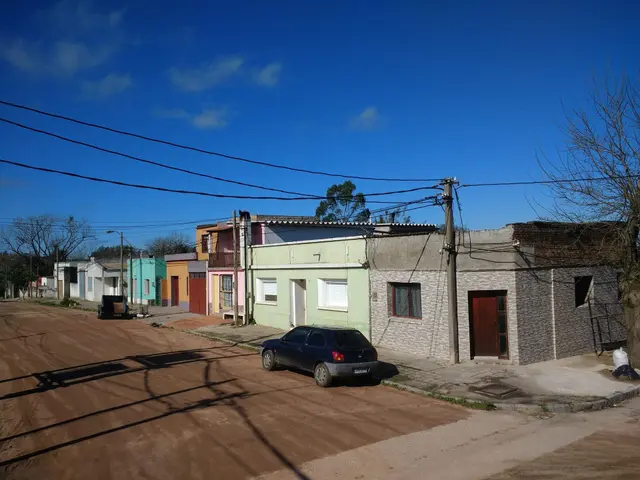
An established residential area with a strong identity of its own. Plenty of blocks still have sand or gravel streets, which gives the place real character but makes rainy days a nuisance. Expect mid- to upper-range houses, a quiet atmosphere and easy beach access. There's retail along Giannattasio, but the interior is purely residential.
- Best for: buyers who want peace and quiet in a settled neighborhood
Lagomar
One of the best balances of services and residential quality on the coast. It has its own shops, schools and health centers, plus a neighborhood life that doesn't lean on Solymar or Montevideo. Good options for houses with land at sensible prices. It's a favorite among families making the move from Montevideo for the first time.
- Best for: families with kids looking for the price-services sweet spot
Solymar / Lomas de Solymar
If Ciudad de la Costa has a downtown, it's Solymar. This is where the services cluster: banks, private health providers, schools, supermarkets, shops of every kind. Lomas de Solymar, the higher ground to the north, offers bigger lots and somewhat lower prices, but weaker public transit access and more reliance on a car.
Between El Pinar (27,190 residents) and Solymar (22,214), these areas hold the bulk of the population. In 2025, El Pinar and Solymar accounted for 23% and 17% respectively of local buyer searches.
- Best for: buyers who want neighborhood life with services close at hand
El Pinar
The greenest and most residential of the major areas. Big lots, mature trees, an almost rural feel without losing access to the basics (which are in Solymar, a few minutes away). Ideal if you work remotely or head into Montevideo only a couple of times a week. Some pockets of El Pinar have genuinely high-quality construction.
- Best for: buyers who put space, greenery and quiet ahead of connectivity
Marindia / Neptunia / Pinamar: the Municipality of Salinas corridor
These localities lie farther east and belong to the Municipality of Salinas, not Ciudad de la Costa. If you include them in the search, compare infrastructure, transport, sewerage and travel times as a separate submarket.
4) The commute: measure your route
Travel time depends on the exact origin and destination, day, time, mode and traffic. Before choosing an area, measure work, school, healthcare and shopping trips across several days.
Main roads
Avenida Giannattasio is the urban and commercial axis. Ruta Interbalnearia is identified as Ruta IB; it is not Route 102, which is the metropolitan ring road.
Public transport
Service is not limited to COPSA and CUTCSA. Parque Roosevelt terminal receives CUTCSA, COME, COPSA and UCOT services. Check frequencies, connections and duration for the specific stop and time.
- Measure exact origins and destinations at real travel times across several days.
- Compare driving and public transport, including waits and connections.
- Add fuel, tolls, parking and time.
- Include school, healthcare, shopping and activities—not only work.
5) Infrastructure: what works and what's still missing
Sewerage: check the parcel and block
Ciudad de la Costa has partial coverage and area-by-area works. Check OSE's map for the exact address and verify whether the property is connected, can connect, or uses a septic system.
If a network is available, obtain a quote for internal works: cost depends on setbacks, slopes, existing installations and bathroom adaptation. According to Montevideo's Third Voluntary Local Review, 89% of the department's total population —including rural areas— has access to a sewer network connected to adequate final disposal; coverage among urban dwellings is 94.2%. The 100% figure in the same report refers to the safe treatment of effluent discharged into the network, not to every property being connected.
Streets and paving
Giannattasio is paved, and so are the main cross avenues. But plenty of interior streets — particularly in Shangrilá, inland Lagomar and parts of Lomas de Solymar — are gravel or sand. That means mud in winter, dust in summer, and extra wear on your car. If your block isn't paved, factor that in: it affects how the property appreciates.
Storm drainage and flooding
Ciudad de la Costa has low-lying areas that have historically flooded during heavy rain. The Carrasco and Pando streams and smaller creeks overflow periodically. Before buying, check whether the property sits in a flood-prone zone. A reliable test: ask the neighbors what happens after 48 straight hours of hard rain. The sewer works include drainage improvements, but progress is gradual.
Healthcare
There's the Centro de Salud Ciudad de la Costa, run by ASSE (Uruguay's public healthcare provider), plus affiliated clinics in several localities. The major mutualistas (Uruguay's member-based private health plans) have branches or offices in the area, mostly along Giannattasio in Solymar. For serious emergencies or surgery, you'll often need to go into Montevideo. The so-called "Hospitalito de la Costa" handles primary care but is no substitute for a full hospital.
Schools
Educational options have expanded a lot in recent years. Every locality has public schools, and there's a solid roster of well-regarded private ones: Salesiano de la Costa (Lomas de Solymar), It-Hué (Lomas de Solymar), José Luis Zorrilla (Lomas de Solymar), Santa Elena (Lagomar), La Amistad (Solymar), Francisco Espínola (Paso Carrasco) and Alemán (Barra de Carrasco), among others. Public high schools operate in Solymar, Lagomar and El Pinar. For university, most students commute to Montevideo.
Shopping and services
Costa Urbana Shopping (San José de Carrasco) works as both a mall and a civic hub: 100-plus stores, movie theaters, a food court and government offices. The Géant at Parque Roosevelt sits minutes from the western entrance. Along Giannattasio in Solymar you'll find supermarkets (Tienda Inglesa, Disco, Ta-Ta), banks, pharmacies, hardware stores and all kinds of small businesses. You won't get the variety of Pocitos or Centro, but for everyday life there's no need to drive into Montevideo.
6) Pros and cons: the honest list
In favor
- More square meters for your money: 30-50% more space than coastal Montevideo for the same budget. Plus land of your own.
- Houses with yards, greenery and open air: if you're coming from an apartment in Pocitos, the day-to-day difference — especially with kids — is enormous.
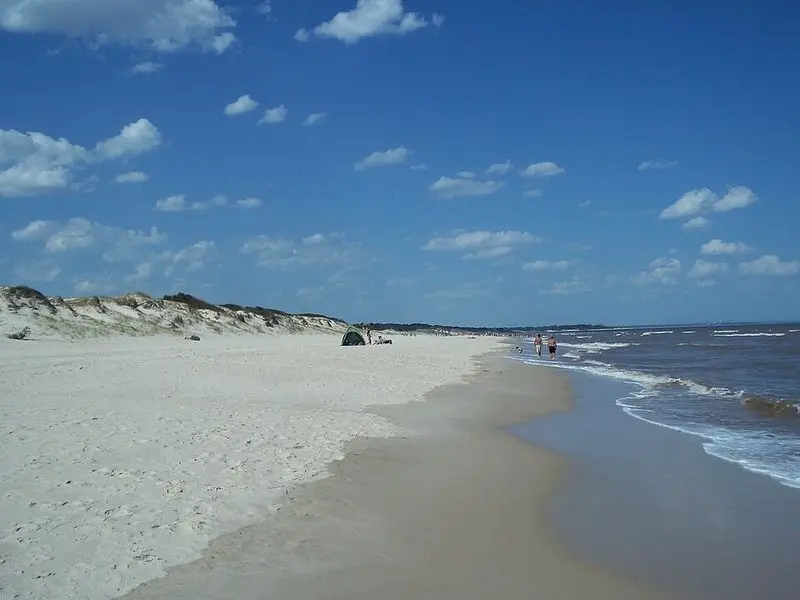
- The ocean is close: many areas sit five to ten blocks from the beach. It isn't Montevideo's Rambla, but it's beach.
- Real neighborhood community: settled areas with the kind of street life that has faded in much of Montevideo.
- Lower overall costs: property tax below Montevideo's, lots available to build on, and tax-advantaged new-build options.
- Steady growth: more than 23,000 new residents in five years, a boom in incentive housing, infrastructure upgrades underway. It's a bet on appreciation.
Against
- The commute is real: if you're in a Montevideo office five days a week, you'll spend between 1.5 and 3 hours a day in transit. That's 375 to 750 hours a year.
- You'll need a car: living comfortably in most of these areas without one is a challenge. Public transit exists, but frequency and coverage are limited.
- Incomplete sewer coverage: many areas still on cesspits. Pump-out costs now, connection costs later.
- Unpaved streets: mud, dust, wear on your car, and harder access in winter.
- Flood-prone pockets: some sectors have drainage problems. Skip the research before buying and it can cost you dearly.
- Limited healthcare: for emergencies or specialized care, you'll likely be heading into Montevideo.
- House upkeep: a big yard, a roof, gates, fencing, a garden — all of it needs maintaining. That's more work and more money than an apartment with a monthly HOA fee.
7) A straight comparison with Montevideo
| Criterion | Montevideo (coastal neighborhoods) | Ciudad de la Costa |
|---|---|---|
| Price per m2 | USD 3,167 - 4,045/m2, per the INGAR Index (June 2026) | USD 1,200 - 2,500/m2 |
| Dominant housing type | Apartments | Houses with land |
| Walkable city life | High (shops, restaurants, culture on foot) | Low to moderate (you drive for almost everything) |
| Typical size | 60-90 m2 (2-bedroom apartment) | 100-180 m2 plus land (3-bedroom house) |
| Public transit | Good (Cutcsa, frequent service) | Limited (COPSA, less frequent) |
| Sewer service | 89% of the department's population; 94.2% of urban dwellings (2023 data) | Partial (rolling out zone by zone) |
| Healthcare / emergencies | Full hospitals and health providers | Clinics and branch offices; serious emergencies handled in Montevideo |
| Education | Full range (elementary through university) | Good K-12 options; university in Montevideo |
| Beach | The Rambla and city beaches | Quieter, less crowded beaches |
| Safety | Varies by neighborhood | Varies by area (less street lighting on interior blocks) |
| Property tax | Intendencia de Montevideo | Intendencia de Canelones (generally lower) |
| Appreciation potential | Steady in established areas | Higher, given growth and infrastructure still to come |
8) Who is Ciudad de la Costa for in 2026?
There's no one-size-fits-all answer. But some profiles fit the equation far better than others:
It's a strong fit if:
- You work remotely or hybrid (three or more days from home)
- You have kids and need room: a yard, a playroom, somewhere to keep the bikes
- Your budget is in the USD 120,000-250,000 range and in Montevideo that only gets you a studio or a one-bedroom
- Your job is east of Montevideo (the airport, Canelones, Pando, Zonamerica)
- You value beach and greenery more than nightlife or urban culture
- You own a car or have reliable access to one
Think twice if:
- You're in the office five days a week in Centro, Cordón or Ciudad Vieja
- You don't have a car and don't plan to buy one
- You need regular access to specialized medical care
- Restaurants, culture and city entertainment are part of your daily routine
- You have neither the time nor the appetite to maintain a house with a garden
9) A checklist for house-hunting on the coast
If you've decided Ciudad de la Costa is your move, run through this list before closing on anything:
About the location
- Sewer: is the block connected to the OSE network? If not, when is it scheduled? Check at ose.com.uy.
- Paving: is the street paved? What about the cross streets? In winter, a gravel road can become impassable.
- Flooding: ask the neighbors what happens in heavy rain. Check for nearby streams or creeks.
- Night lighting: drive the area after dark before you decide.
- Public transit: if you'll depend on the bus, find the nearest stop and confirm how often it actually runs, not how often the schedule says it does.
About the property
- Damp: ocean proximity and wind mean moisture. Inspect walls, ceilings, windows and doors.
- Roof: in a house, the roof is the priciest maintenance item. Get it inspected.
- Fencing and gates: check the condition of the entire perimeter.
- Lot drainage: does water pool anywhere? How does runoff drain?
- Insulation and ventilation: many older houses here were built as summer homes. Make sure it works as a year-round residence (thermal insulation, heating).
About the numbers
- Property tax: ask for the most recent bill. Remember, this is Canelones, not Montevideo.
- Cesspit pump-out: if there's no sewer connection, build the monthly cost into your budget.
- Commuting costs: gas, tolls and parking where applicable. Calculate it monthly, not per trip.
- Annual upkeep: garden, pool if there is one, exterior paint, roof waterproofing.
If you're renting, start here:
- What you need to rent in Montevideo (most of it applies in Canelones too)
And if you're buying:
Sources
- Montevideo government — Third Voluntary Local Review (2023 sewerage data)
- Intendencia de Canelones: imcanelones.gub.uy
- OSE - Ciudad de la Costa sewer project: ose.com.uy/saneamiento
- INE (Uruguay's national statistics institute) - 2023 census and population estimates: ine.gub.uy
- El Observador - The growth of Ciudad de la Costa: elobservador.com.uy
- Tax-incentive housing in Canelones: elobservador.com.uy
- LR21 - Record year for the tax-incentive housing law in 2025: lr21.com.uy
- Wikipedia - Av. Giannattasio: es.wikipedia.org
- Costa Urbana Shopping: costaurbana.com.uy
Looking for property in this area? Browse available listings or message us on WhatsApp and we'll help you find it.
Related articles
- Living in La Floresta: prices and what the area is like
- Year-round rentals in La Floresta, Costa Azul and Las Toscas
- Montevideo vs. Punta del Este (2026): a comparison by lifestyle, cost and seasonality
- Living in Malvín and Punta Gorda (Montevideo) in 2026: pros, cons and how to choose
- The best areas for families with children in Montevideo (2026): criteria and shortlist