Selling a house in Minas, Lavalleja: price, paperwork and what you keep
Short answer
To sell a house in Minas, get three things ready before you list: a price range based on comparable houses in the city, a file with the title, approved plans and debts paid up, and the math on what you keep. In an example of a sale for USD 150,000 (house bought before July 2007, Catastro value of USD 50,000), after deemed IRPF (personal income tax) and ITP (property transfer tax) you keep USD 146,300; with a 3% + VAT commission, USD 140,810. If it was your permanent home and you reinvest, you may be exempt from IRPF.
Selling a house in Minas? We help you put the file in order and work out what you keep. We handle the sale. Message us on WhatsApp with the padrón (cadastral parcel number), the area, the floor and lot sizes and photos of its current condition.
A price you can defend
Comparables in Minas, with dates
Collect recent listings of comparable houses within Minas and write down the date of each one. In the guide to buying a house in Minas we list asking prices from September 2026, population data and the city's share of empty properties.
- Keep downtown and the area around the former bus terminal, where UTEC now operates, separate from neighborhoods such as La Coronilla or Portal de las Sierras. Someone who needs to walk to services does not weigh an outlying house the same way.
- Compare documented floor area, condition, yard and pending work.
- Treat listing figures as asking prices. Ask about closed sales when there are any.
What is not a price
The Minas padrón viewer shows Catastro values: they are used for taxes, not for setting the price. INGAR's online valuation only covers Montevideo for now.
For a house in Minas you need an appraisal based on local comparables and the property's actual condition. INGAR's valuation guide explains the methods and what a serious report should include.
Decide from the start your minimum, which payment terms you would accept and which repairs you would make before showing the house.
The file the buyer will ask for
Title and debts
Ask your escribano (notary) to gather the title and its history and to spot any registry problem. What a notary does and what they charge is in the guide to the escribano in a sale.
- Registry certificates: for Lavalleja, the Dirección General de Registros issues them usually within one day on a standard request and the same day on an urgent request.
- Cadastral certificate: identifies the parcel. The cadastral certificate guide links to the procedure.
- Contribución Inmobiliaria (property tax): check the debt by padrón in Lavalleja.
Plans and extensions
Find the approved plans, the files for any extensions and the completion certificate if there is one. The Intendencia (departmental government) requires a permit to build, renovate or regularize.
If you added a room, enclosed a patio or built a back apartment, tell the professional what was done and when. An irregularity found before listing can be priced. If it turns up after you accept an offer, it usually shifts deadlines and price.
Tenants, heirs and co-owners
- Rented house: have the lease, term, rent and handover conditions at hand.
- Estate, co-ownership or powers of attorney: the notary determines who signs and what is missing. If you inherited the house, start with the guide to estates and property.
The listing: what the house solves
A good listing in Minas says what that location solves: being close to downtown, schools, services or the way out to ruta 8. Do not make up travel times; measure them.
- Give lot size and built area separately.
- State whether there are added structures and whether they appear on the plans.
- If there is damp or pending work, show how far it goes and, if you can, a professional diagnosis with a quote.
If the house was closed for years, quotes for the roof, damp and installations give the buyer a basis to negotiate without guessing. For photos, cleaning and repairs that are worth it, see the guide to preparing your property for sale; the most common stumbles are in the 12 mistakes when selling a property.
Work out what you keep, not only what you ask
Ask the notary for a tax calculation before you set your minimum. The full explanation of each tax is in the guide to property taxes. What goes into the seller's math:
- ITP: 2% paid by the seller on the lower of the updated Catastro value and the price.
- IRPF (resident individual): 12% of the taxable gain. If you bought before July 1, 2007, you can opt for the deemed method: 15% of the higher of price and Catastro value, which works out to 1.8% of the price when the price is higher.
- IRNR (non-resident seller, non-resident income tax): 12% of the taxable gain, withheld by the notary.
Worked example
Hypothetical case of a house that was not a permanent home: sale for USD 150,000, bought before July 2007 and an updated Catastro value equivalent to USD 50,000 at the day's exchange rate.
| Item | Calculation | USD |
|---|---|---|
| Deemed IRPF | 1.8% × 150,000 | 2,700 |
| Seller's ITP | 2% × 50,000 | 1,000 |
| Net before commission | 150,000 − 3,700 | 146,300 |
| Commission 3% + VAT | 3.66% × 150,000 | 5,490 |
| Net after commission | 146,300 − 5,490 | 140,810 |
The 3% + VAT is the market benchmark explained in the guide to selling on your own or with an agency; no percentage is set by law. Debts and other case-specific costs are not included. The notary compares the deemed method with the actual calculation and uses the official values of the day.
If it was your permanent home
The DGI provides for an IRPF exemption if all these conditions are met together:
- The value of the house you sell does not exceed 1,200,000 UI (unidades indexadas, an inflation-indexed unit).
- You put at least 50% toward buying another permanent home.
- The new home is worth up to 1,800,000 UI.
- No more than 12 months pass between the sale and the purchase.
The notary withholds the tax anyway and you then apply for a refund. Have the purchase date and price, documented improvements and the reinvestment plan at hand.
When an offer comes in
Compare price, timing, payment method, whether it depends on a mortgage and handover date. A somewhat lower offer with certain funds and a firm date can be worth more than a high one with uncertain conditions. Have the notary review the preliminary agreement before you sign or take a deposit.
Frequently asked questions
What taxes does the seller of a house in Minas pay?
The seller pays 2% ITP on the lower of the updated Catastro value and the price. If the seller is a resident individual, they also pay 12% IRPF on the gain, or the deemed 1.8% of the price if they bought before July 1, 2007. A non-resident pays 12% IRNR, withheld by the notary. The sale of your permanent home may be exempt from IRPF if you reinvest.
Do I have to regularize an extension before selling?
You have two options. Regularize it first, with a registered professional and the regularization permit from the Intendencia de Lavalleja, or sell disclosing the situation and taking what regularization will cost off the price. What you should not do is advertise as part of the house square meters that are not on the approved plans: the buyer finds out in the title search or the inspection.
Should I publish the exact address of the house?
Publish the area or the block, not the street number. Give the exact address to whoever books a viewing, along with the padrón so their notary can start checking. That way you filter out the curious without slowing down a serious buyer, who will need the precise location anyway to measure their trips before making an offer.
How long does it take to gather the papers to sell in Lavalleja?
Certificates from the Dirección General de Registros for Lavalleja usually come out within one day on a standard request and the same day if you ask for the urgent one. What usually takes longest is something else: plans that do not match the building, an unfinished estate or Contribución debts. Start there before you list.
Can I set the price based on what I need for my next house?
You can use that figure to set your minimum, but the buyer will compare with other houses for sale in Minas. Build the range from comparables in the city and subtract ITP, IRPF, commission and debts. If the net is not enough, find out before you list, not after the first offer.
Keep reading:
- Buying a house in Minas: asking prices and city data
- Selling a small farm or land in Lavalleja
- INGAR services for owners
Sources
- IMPO, Title 19 of the 2023 Consolidated Text (ITP), Title 8 (IRNR) and Decreto 149/007, art. 37.
- DGI, IRPF: capital gains on urban property and category 1.
- Dirección General de Registros, property information certificates.
- Intendencia de Lavalleja, building permit and Contribución debt lookup.
- Catastro, cadastral certificate.
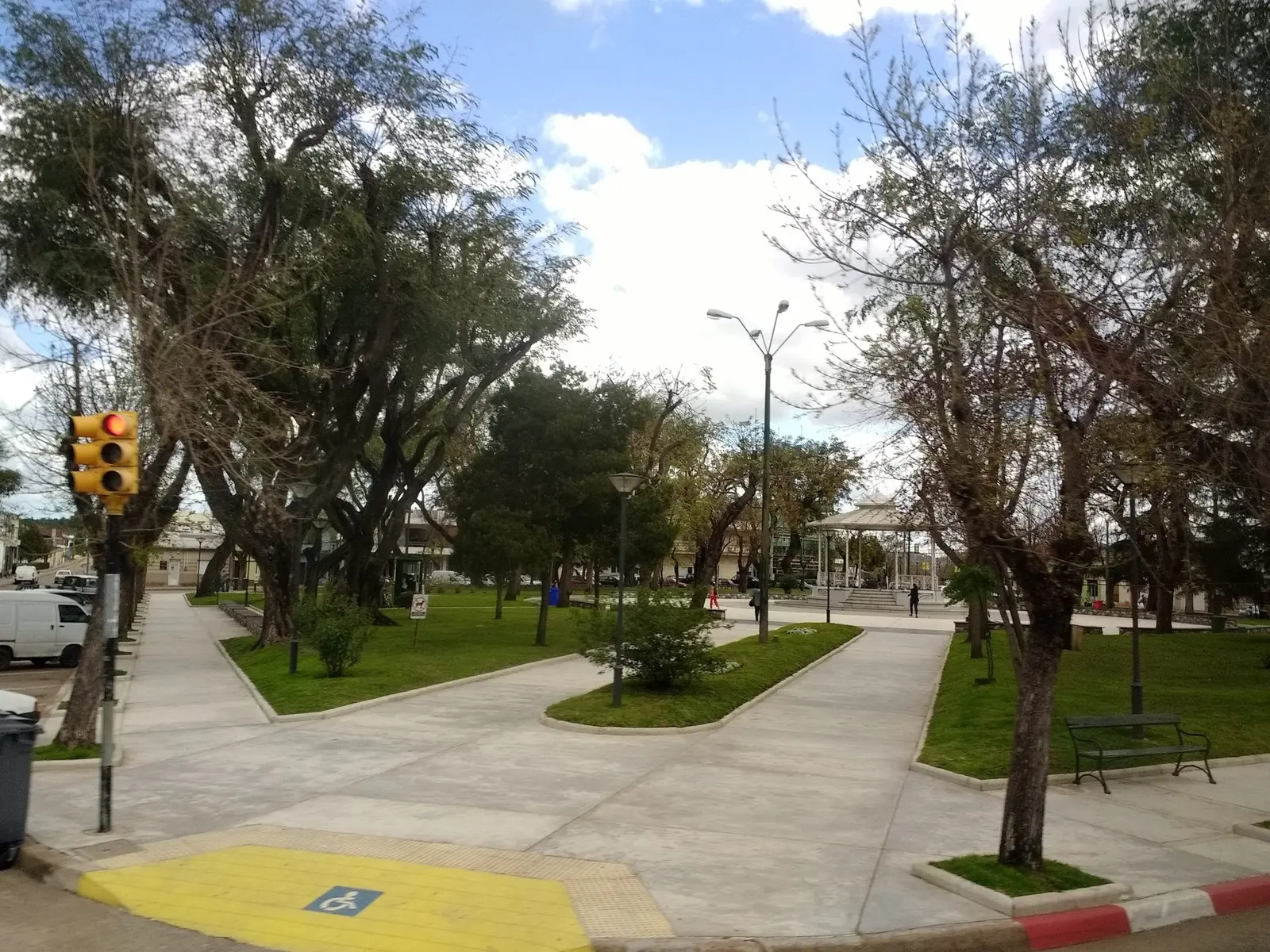
General information reviewed against official sources available as of September 26, 2026. The example is hypothetical; the tax calculation for each sale is done by the notary with the official values of the day. Cover photo: Mx. Granger, license CC0, via Wikimedia Commons.