Selling a house or a lot in Rocha: paperwork, price and taxes
Short answer
To sell a house or a lot in Rocha, first gather the padrón, title, survey plan, building plans and tax status: if there is unpermitted construction, getting it approved by the Intendencia usually takes months. Set the price using comparables from the same micro-area, not from the beach town as a whole. Before accepting an offer, work out your net with the escribano: 2% ITP and, depending on your case, 12% IRPF or IRNR on the gain.
Do you have a house or a lot to sell in Rocha? We help you put the file and the comparables in order, and we handle the sale. Message us on WhatsApp with the town, the padrón number and the type of property.
Who buys in Rocha and what they will ask you
- Holiday home: upkeep, condition after the winter and possible rental income.
- Year-round home: winter services, access, internet and distance to healthcare and schools.
- Lot: what can be built on that padrón.
Pick the use you can back up with documents and prepare those answers before you list. The general steps for getting ready, photos and viewings are in the guide to preparing a property for sale; here is what changes in Rocha.
The property file
Before you book a photographer, locate:
- The padrón (cadastral parcel number) and cadastral locality, the title and the survey plan.
- Building plans and records, the certificate of completion if there is one, and details of any later extensions.
- The latest bills for contribución inmobiliaria (property tax) and Primaria (a school tax). The Intendencia de Rocha (departmental government) has an online tax lookup and the DGI (tax authority) issues the certificate showing Primaria is paid up.
- Utility bills and repair invoices you can document.
- If it was rented out, the income actually collected, expenses and occupancy by period.
The cédula catastral (cadastral certificate) proves the cadastral value, not the market price. The Dirección General de Registros (property registry) reports the recorded deeds and acts: an escribano (notary) can order that review before there is a buyer waiting. That way, an unfinished probate, a power of attorney issue or a record that causes delays shows up in time.
If there is unpermitted construction
Getting construction approved retroactively by the Intendencia usually takes months: the professional's survey, plans, the application file and any objections. If work was never declared, there may also be unpaid social security contributions; the guide to BPS construction contributions explains what gets checked at closing. Know where the file stands before you promise a closing date.
Price: compare with what actually competes with yours
What the Punta del Diablo listings show
On September 19, 2026, the same agency listed three lots in Punta del Diablo, still active on September 26, 2026:
| Listing | Area | Asking price | USD per m² |
|---|---|---|---|
| El Rivero, 500 m from the ocean, “with utilities” | 500 m² | USD 55,000 | ≈ 110 |
| El Rivero, calle Las Maravillas | 541 m² | USD 35,000 | ≈ 65 |
| End of calle Las Maravillas, “further from the center” | 707 m² | USD 23,000 | ≈ 33 |
Within the same beach town, the asking price per square meter varies more than threefold depending on location, utilities and distance to the center. That is why a “lot in Punta del Diablo” is not comparable to another just because of the name. The same goes for houses: a 2-bedroom, 80 m² cabin on a 600 m² corner lot, 4 blocks from the beach, was listed at USD 130,000.
These are asking prices. Uruguay has no complete public database of closing prices: use closed sales only when your advisor can document them, and note the date and price changes of each comparable.
Three questions for each comparable
- Could the same buyer choose that property instead of mine?
- What specific difference justifies paying more or less?
- How much would it cost to close that gap?
Cadastral value is not the price
The cadastral value shown in INGAR's padrón viewer for Rocha is a tax value. In the DNC (national cadastre) data cut of August 2026, the median for ordinary-ownership padrones, in Uruguayan pesos, is:
- $ 2,756 in La Esmeralda.
- $ 3,199 in Punta Rubia.
- $ 1,261,571 in La Pedrera.
Between neighboring beach towns, the tax bases differ enormously, and none of them tells you what your property will sell for. How to build a value from comparables is explained in the appraisal guide.
What you keep: the seller's taxes
Before accepting an offer, work out your net with the escribano:
- ITP (property transfer tax): the seller pays 2% on the lower of the updated Catastro real value and the price.
- IRPF (personal income tax), if you are a resident individual: 12% on the taxable gain. For urban properties bought before July 1, 2007, you can opt for the deemed gain: 15% of the price or of the real value (whichever is higher), which works out to 1.8%.
- IRNR (non-resident income tax), if you are not a resident: a 12% rate, withheld by the escribano who handles the sale.
The exemption for a permanent home
The DGI exempts the sale of a permanent home if all of these conditions are met:
- The property sold does not exceed 1,200,000 UI (indexed units).
- At least 50% of the price goes into another permanent home.
- The purchase happens within 12 months.
- The new home does not exceed 1,800,000 UI.
A summer house is not a permanent home, so it does not qualify. On a rural property, the exemption covers only the part that is a permanent home, with the same caps. The rural deemed gain is calculated differently: on the market value as of July 1, 2007.
The agency commission and what the seller pays even when selling privately are in the guide selling on your own or through an agency. If you live in Argentina, the tax guide for Argentines who own property in Uruguay also covers the Argentine side of the sale.
What the listing should show for each type of property
Beach house: photos of every room, the exterior, access from the street and the real views; documented repairs; equipment included; annual running costs. Show the window frames and the roof if the house spent winters closed up: a buyer purchasing from a distance needs to assess upkeep.
Year-round home: which utilities are connected and how you get there in winter. “With internet” is vague if there was only occasional mobile signal: check the service at the address.
Lot: padrón, survey plan, frontage and area according to the documents, access, utilities and land-use category if it has been confirmed. Do not write “ideal for cabins” or “can be subdivided” without a technical check to back it up: the Intendencia publishes different ordinances for each town, including Punta del Diablo and Punta Rubia–Santa Isabel. The guide to buying land in Rocha shows what your buyer is going to ask.
If you took the photos in another season, add the date when the vegetation, access or surroundings have changed. A continuous video from the street to the interior answers many questions from buyers in Argentina, Brazil or Montevideo, but it does not replace an inspection or the paperwork.
If you live outside Uruguay
Ask the escribano to check from the start who signs, whether a power of attorney is needed for this sale and how you will receive the funds. The role and cost of the escribano are explained separately. With that sorted, you can give the buyer a closing date and a payment method you can actually deliver on.
If the house was rented out
Prepare a sheet with income collected, expenses paid and days of your own use. Do not advertise an “8% return” without stating the capital, period, costs and taxes. If there are future bookings or leases in force, make clear to the escribano and the buyer which rights and obligations are transferred.
If the buyer plans to rent it out, the guide to seasonal rentals in Rocha has asking rates in La Paloma and the status of the Ley 20.352 registry.
A sales sequence that avoids negotiating blind
- Preparation: file, technical review of what is visible, repair quotes and comparables.
- Listing: enough location detail to assess the surroundings, current photos, verified utilities and which documents you have.
- Inquiries and viewings: filter by intended use, budget and timeline. If someone wants to build or extend, steer the conversation toward a check by padrón.
- Offer: write down amount, payment method, deadlines and conditions on a single sheet. Ask the escribano to review any reservation or promise of sale before signing.
The most common pricing, photo and negotiation mistakes are in 12 mistakes when selling a property.
Frequently asked questions
What taxes does the seller of a house in Rocha pay?
2% ITP on the lower of the updated Catastro real value and the price. If the seller is a resident individual, 12% IRPF on the gain; if they bought before July 1, 2007, they can use the deemed gain, which comes to 1.8% of the price or the real value. If they are not a resident, 12% IRNR, withheld by the escribano.
How much is a lot in Punta del Diablo worth?
It depends on location and utilities. On September 26, 2026, the same agency was asking USD 55,000 for 500 m² in El Rivero, 500 m from the ocean and with utilities; USD 35,000 for 541 m² in the same area; and USD 23,000 for 707 m² further from the center. These are asking prices, between USD 33 and 110 per square meter.
How long does it take to regularize construction so you can sell?
It usually takes months. A professional has to survey what was built, draw up plans and file the application with the Intendencia de Rocha, which may raise objections. If the work was never declared, there may also be unpaid contributions to the BPS (social security). Start before you list and do not promise a closing date until you know the status of the file.
Do I pay IRPF if I sell my summer house?
Generally, yes. The DGI exemption requires the property sold to be a permanent home, worth no more than 1,200,000 UI, and at least half the price to be reinvested in another permanent home of up to 1,800,000 UI within 12 months. A summer house fails the first condition. If you bought it before July 2007, look at the deemed gain option.
Can I sell my house in Rocha if I live abroad?
Yes. You can sign in person or through a power of attorney granted for that sale. If you are a tax non-resident, the sale is subject to 12% IRNR on the gain and the escribano handling it acts as withholding agent. Agree from the start with the escribano who signs, which documents come from abroad and which account the funds are transferred to.
Further reading:
- Buying land in Rocha: what your buyer will check
- Living year-round in Rocha: which town to choose
- A house in Rocha for seasonal rental
- INGAR services for property owners
Sources
- IMPO, Título 19 (ITP), Título 8 (IRNR) and Decreto 149/007, art. 37.
- DGI, IRPF on the sale of urban properties, rural properties and the permanent home exemption; Primaria certificate.
- Intendencia de Rocha, tax lookup and land use and building rules.
- Dirección Nacional de Catastro, cédula catastral; Dirección General de Registros, property certificates.
- INGAR, Rocha padrón viewer (DNC data cut, August 2026).
- InfoCasas, listings 194282202, 194283273, 194282854 and 193423535, accessed September 26, 2026.
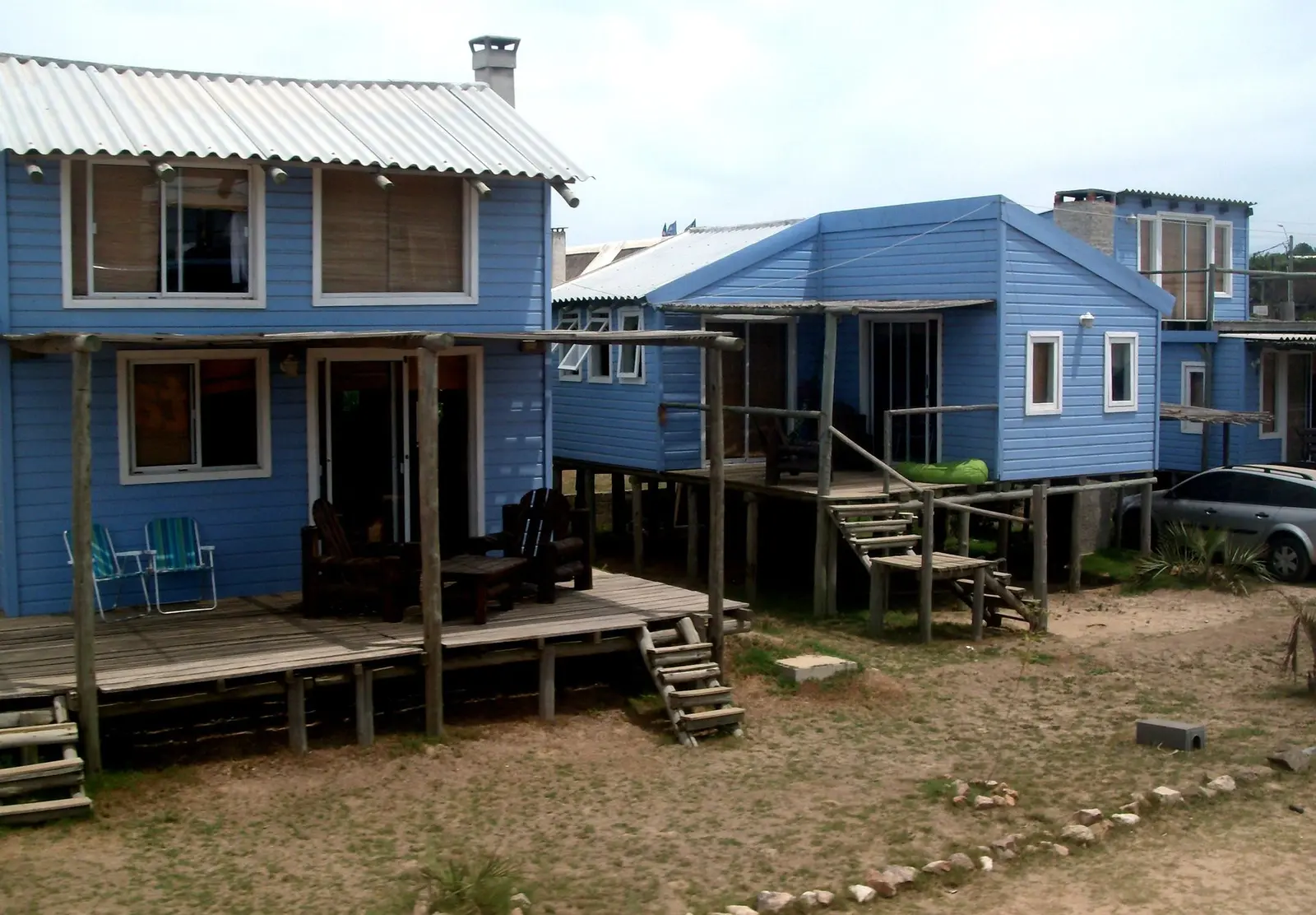
General information reviewed against official sources available as of September 26, 2026. The prices cited are listings active on that date, not closed sales; the net proceeds of each sale are calculated by the escribano based on the seller's situation. Cover photo: Gerardo Silveira, license CC BY-SA 3.0, via Wikimedia Commons.