Selling a property in Punta del Este: taxes, paperwork and your net
Short answer
When you sell in Punta del Este you pay 2% ITP (property transfer tax) on the lower of the updated Catastro value and the price, plus income tax and the agreed commission. If you bought before July 1, 2007, as an individual you can opt for a deemed-gain tax of 1.8% of the price, whether or not you live in Uruguay. The IRPF (Uruguayan personal income tax) exemption for a permanent home does not apply to a summer house. On an apartment sold for USD 250,000, that math leaves about USD 232,500 before debts.
Thinking about selling your apartment or house in Punta del Este? We help you put together the file the buyer will ask for and a first estimate of what you keep. We handle the sale: we work in Punta del Este and Maldonado. The final tax calculation is done by the escribano (notary). Message us on WhatsApp with the location, the property type, the year you bought it and whether you live in Uruguay or abroad.
What you keep: a worked example
A hypothetical case: you bought an apartment in 2005 and sell it for USD 250,000. The updated Catastro value equals USD 150,000 at that day's exchange rate.
| Item | How it is calculated | Amount |
|---|---|---|
| Sale price | — | USD 250,000 |
| Income tax (deemed gain) | 12% × (15% of the price) = 1.8% | − USD 4,500 |
| Seller's ITP | 2% × USD 150,000 (the lower) | − USD 3,000 |
| Real estate commission | 4% (3.28% + VAT, CIPEM fee schedule) | − USD 10,000 |
| Net before debts and closing costs | USD 232,500 |
The math is the same if you are a tax resident in Uruguay (IRPF) or if you live abroad and sell as an individual (IRNR, the non-resident income tax): both taxes are 12% of the taxable gain. The escribano compares the deemed gain with the actual calculation and uses the official values on the signing date. The commission is whatever you agree: the law sets no percentage, as explained in selling on your own or through an agency.
Taxes, depending on who sells
ITP
In a sale, ITP is 2% for each party on the lower of the updated Catastro value and the deed price. For resale properties, the Catastro value is usually below the price.
If you are a tax resident in Uruguay: IRPF
- The DGI taxes the taxable gain at 12%, not the price.
- If you bought before July 1, 2007, you can opt for the deemed gain: the gain is 15% of the higher of the price and the Catastro value. The tax comes to 1.8%.
- If you bought later, it is calculated on the actual gain: price minus cost adjusted by UI (unidades indexadas, an inflation-indexed unit), ITP and documented improvements.
The permanent-home exemption does not apply to a second home. The DGI reserves it for cases where both the home you sell and the one you buy are your permanent home, with a price of up to 1,200,000 UI and at least 50% reinvested within 12 months. If Punta del Este is your summer house, it does not qualify; only if it is where you live all year.
If you live outside Uruguay: IRNR
- IRNR taxes the sale at 12% of the taxable gain.
- The 1.8% deemed gain is also available to non-resident individuals. Title 8, art. 13, lit. B, requires that gain to be calculated under the IRPF rules, which include the 15% option for urban property bought before July 1, 2007 (Title 7, art. 29). The mandatory actual-gain basis in art. 16, lit. B, only applies to entities from low- or no-tax jurisdictions.
- The escribano withholds the tax at signing (Decreto 149/007, art. 37).
If you are Argentine, what happens on the other side (Bienes Personales, Ganancias) is covered in what taxes an Argentine pays on an apartment in Uruguay. If the owner is a company or an estate, ask for a specific calculation.
The file a buyer in Punta del Este asks for
The general side of preparing a sale (price, photos, viewings) is in how to prepare your property to sell faster. In Punta del Este, the buyer will also ask about the year-round cost:
- Padrón and unit: padrón (cadastral parcel number), unit, parking space and storage unit. The escribano reviews the title and requests the registry certificates.
- Building: twelve months of gastos comunes (building service charges), financial statement, reserve fund, meeting minutes, approved works and a no-debt certificate. How the buyer reads them: gastos comunes in Punta del Este.
- Taxes: the year's contribución inmobiliaria (property tax) and Primary Education tax (impuesto de Primaria).
- Works: if there were renovations, the BPS (social security) records; the escribano will tell you whether you need the special certificate.
- Rentals: if you rented it out in season, bookings collected, cancellations and weeks of personal use, listed separately. The investor buyer redoes the math with the seasonal rental and net yield method.
- Furniture: an inventory of what stays and what goes. CIPEM states that the final inventory is attached to the boleto de reserva (reservation agreement).
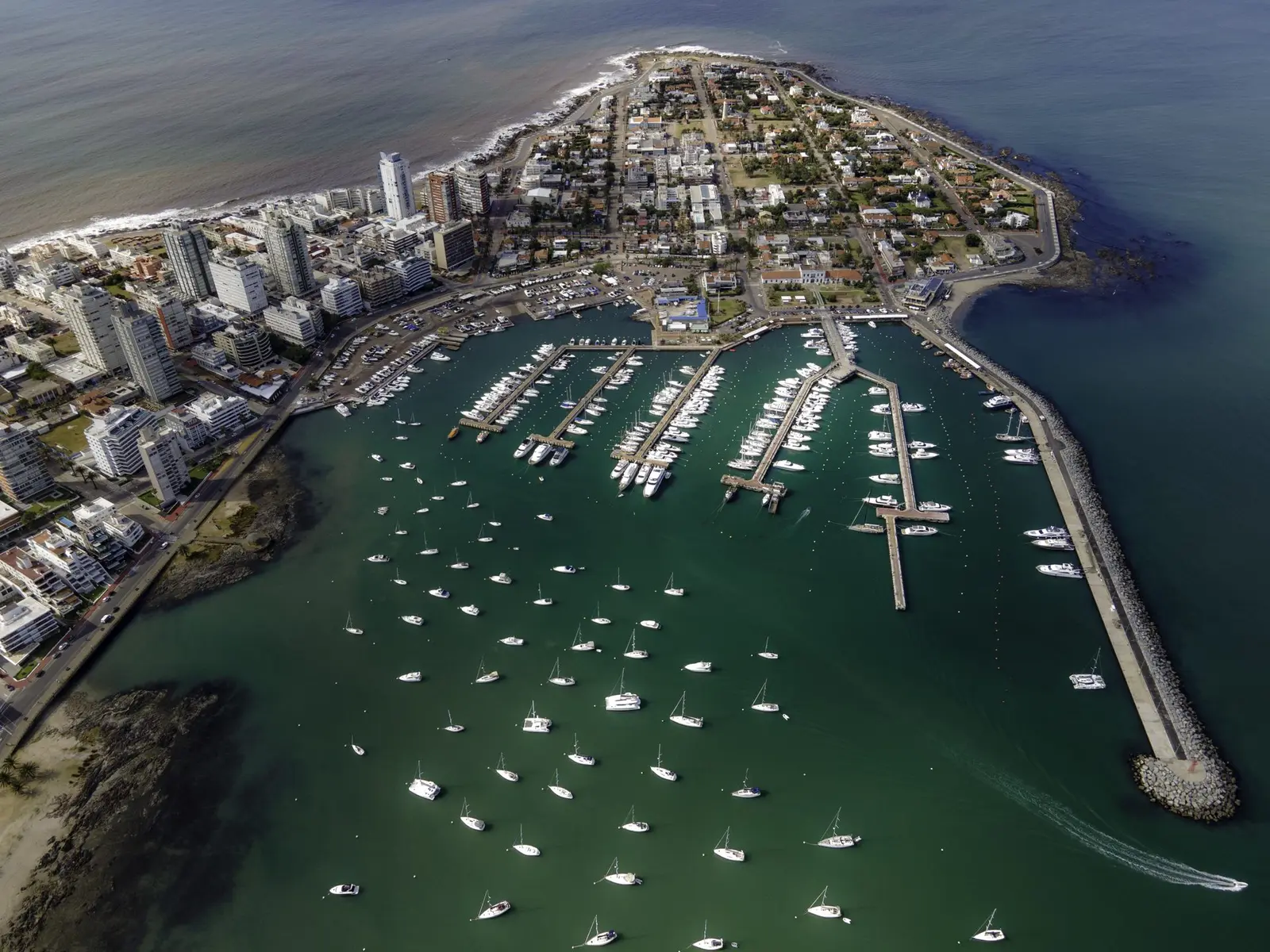
- Mooring: if you use a mooring in the port, it is not part of the property you are selling; its terms are checked separately with Hidrografía.
Unpermitted works: regularize before listing
Departmental Decree 4118/2026 allows works built without a permit up to December 31, 2025 to be regularized. According to its implementing rules (Resolución 05583/2026), it runs until November 22, 2027. Sorting this out before you receive an offer lets you advertise the square meters you can prove.
The price: what to look at in listings
Two one-bedroom listings checked on September 26, 2026:
- Península, USD 155,000, posted on March 26, 2026. It declares gastos comunes of UYU 44,040 per quarter (about UYU 176,160 a year) and annual property tax of UYU 31,803.
- Roosevelt, USD 100,000, listed since February 21, 2021 and still active. It says «$ 7,500 gastos comunes» without stating the period.
The second one is a warning: a price still listed five and a half years later is not a market reference. Compare against recent listings in your micro-area, with floor area, charges and date, and ask the agency for documented closed sales. How a price is built from comparables: property appraisal in Uruguay.
If you sell from abroad
- Decide who holds the keys, who handles viewings and who can decide on an offer.
- If someone will sign on your behalf, the escribano has to review the power of attorney before any reservation exists.
- Put the agency's authorization, term, commission and listing conditions in writing: Ley 20.380 provides for the client's verifiable authorization.
- For a remote buyer, an uncut video of the critical points, readable floor plans and the full file work best.
More services for owners at /propietarios.
Frequently asked questions
What taxes does a non-resident pay when selling in Punta del Este?
They pay 12% IRNR on the taxable gain, which the escribano withholds at signing, plus 2% ITP on the lower of the updated Catastro value and the price. If they bought before July 1, 2007, they can opt for the deemed gain: the tax comes to 1.8% of the price. The mandatory actual-gain basis only applies to entities from low-tax jurisdictions.
Can I avoid IRPF if I sell my summer house?
Not through the permanent-home exemption. The DGI requires both the home you sell and the one you buy to be your permanent home, with a price of up to 1,200,000 UI and at least 50% reinvested within 12 months. A summer house or a second-home apartment does not meet that condition. If you bought before July 2007, you can use the 1.8% deemed gain.
Is it better to sell in summer or wait for another time of year?
Get the file, photos and keys ready in October or November so you are set for the season. In December 2025, the INE recorded 6,925 sale registrations nationwide, and 16.87% were in Maldonado: about 1,168 filings. That is a figure for the department, not the time it will take to sell your property.
Do I have to regularize an extension before selling?
If the built area does not match the approved plans, the buyer and their escribano will spot it, and that affects price and timing. In Maldonado, Decree 4118/2026 allows works built without a permit up to December 31, 2025 to be regularized, with a registered professional, and it runs until November 22, 2027. Check with an architect before listing.
Is the port mooring sold with the apartment?
No. A mooring in the port of Punta del Este is not part of the property you sell: its allocation terms are checked separately with Hidrografía. Do not include it in the listing or the reservation as if it were part of the property.
Keep reading:
- Living year-round in Maldonado and Punta del Este: where to buy and what to try first
- 12 mistakes when selling a property in Uruguay
- Buying in Punta del Este as an Argentine
- Buying land in Maldonado: what you can build
Sources
- IMPO, Title 19 (ITP), Title 8 (IRNR), Title 7, art. 29, Decreto 149/007, art. 37 and Ley 20.380.
- DGI, IRPF on the sale of urban property and permanent-home exemption.
- Digesto de Maldonado, Decree 4118/2026; Intendencia de Maldonado, implementing rules (Resolución 05583/2026).
- INE, property sales for November and December 2025.
- Cámara Inmobiliaria de Punta del Este–Maldonado, fees and sales.
- BPS, special certificates; DGR, remote requests.
- InfoCasas, listings in Península and Roosevelt, checked on September 26, 2026.
General information reviewed against official sources available as of September 26, 2026. The example is hypothetical: the tax calculation depends on your tax residence and on the purchase date and cost, and the escribano does it with the values on the day. Cover photo: Jimmy Baikovicius, CC BY-SA 2.0 license, via Wikimedia Commons.