Buying land in Rocha: how to know if you can build what you want
Short answer
Before you put down a deposit on a solar (lot) in Rocha, identify the exact padrón (cadastral parcel number), have your escribano (notary) review the title and registry records, and hire an architect to request a written buildability report for that padrón from the Intendencia (departmental government). If the lot falls inside the coastal protection strip (250 m from the shoreline), any construction also needs Prior Environmental Authorization from the Ministerio de Ambiente, under Decreto 349/005. Being close to the sea, an «urban» land category or the houses next door do not guarantee a permit for your project.
Have your eye on a solar in Rocha? We tell you which report to request from the Intendencia and what to check before you reserve. We stay with you until the deed is signed. Message us on WhatsApp with the padrón number or the listing link and what you plan to build.
What this guide covers
This guide focuses on urban and suburban lots in the beach towns: La Paloma, La Pedrera, Punta Rubia, Punta del Diablo and nearby. For rural land, start with the guide to buying a chacra in Rocha, which covers rural land, protected areas and grid connection.
A house, two cabins and a tourist complex each call for different answers. Before you look at listings, write down:
- Approximate square meters you want to build.
- Number of units.
- Intended use: your own home, seasonal rental or commercial.
- Water and sewage needs.
That sheet makes the technical inquiry useful. If you are still torn between buying a finished house or building, the comparison of house, apartment and building sorts out the overall decision.
Two listings that show why access matters
Two asking prices, checked on September 26, 2026 on InfoCasas:
- A 547 m² corner solar, 800 m from La Serena beach, in La Paloma, for USD 30,000. The listing notes that one of its two streets, Calandrias, has not been opened.
- A 640 m² lot in La Balconada, 250 m from the beach, for USD 52,000. The portal places the padrón in El Cabito.
These are offers on two padrones, not closing prices or building permits. To compare them you need to check the street, services, zoning rules and exact location.
Eight filters for a solar you want to buy
1. The lot's identity
Ask for the padrón number, department and cadastral locality. Get the survey plan and locate the boundaries on the ground: a photo with a rectangle drawn over Google Maps proves neither dimensions nor boundary lines. The cadastral certificate uses the same data.
INGAR's padrón viewer for Rocha records a median area of 525 m² for land under common ownership, in the August 2026 DNC dataset. That helps size a typical solar; the padrón and its plan define the actual lot.
The marketing name of an area can group several different cadastral localities. In the same dataset:
- La Pedrera has 407 urban padrones.
- Santa Isabel de la Pedrera has 1,912.
- Punta Rubia has 2,726.
If a listing says «La Pedrera», ask for the cadastral locality and the padrón shown in the paperwork before you look up the rules. If the position of fences, trees or an existing structure matters for your design, have a surveyor check the land against the plan.
2. Ownership and registry status
Your escribano should check the title, the seller's authority to sell and the registry history, and also review the terms of the reservation or purchase promise. The Dirección General de Registros issues property information certificates on recorded deeds.
Make sure the contract says what happens if the paperwork or the project's feasibility turn out unsatisfactory. Paying the property tax does not prove ownership or a right to build.
Also ask your escribano to check whether the padrón sits in an area where the Intendencia holds a right of first refusal. Article 66 of Ley 18.308 provides for that purchase priority in areas defined by land-use instruments; Rocha's geoportal publishes the departmental resolution.
3. The rules that apply to the padrón, not to the town in general
Rocha has departmental guidelines, a coastal ordinance, local plans and building ordinances. The Intendencia's regulatory repository includes, among others:
- The Los Cabos plan.
- The Lagunas Costeras plan.
- The Punta del Diablo ordinance.
- The Punta Rubia–Santa Isabel ordinance.
Which rules apply depends on the exact location and on the project. Check land category, setbacks, height, lot coverage, number of units, vegetation requirements and special conditions. Ask for a technical answer for your padrón and your building plan, not a verbal assurance that «you can build around here».
If you want to build with shipping containers, check the «Zonas exclusión contenedores marítimos» (container exclusion zones) map published in the same repository, together with Decreto 5/2016 and Resolución 2431/2019. Ask the Intendencia to place the padrón on that map before you get a quote for the structure.
4. Coastal and environmental protection
Article 153 of the Código de Aguas sets a coastal protection strip of 250 meters from the upper edge of the shoreline, with specific rules where there is a national highway or an open, paved seafront road. Ley 19.772, article 10, allows that strip to be extended for certain vulnerable features.
Decreto 349/005, art. 2, item 33, requires Prior Environmental Authorization for any construction or works planned inside the coastal protection strip. Being in the strip is not an outright ban, but the departmental permit alone is not enough: have your professional confirm the boundary and apply for the authorization before you count on that build.
Protected areas and sensitive settings may carry extra rules. You cannot infer a padrón's legal status from the number of houses nearby, the subdivision's marketing name or the distance shown in an app.
5. Water, power, sewage and internet
Ask each utility for a feasibility statement and a connection quote by address or padrón. «The line runs past the gate» does not tell you whether a connection is approved or what it costs. If there is no sewer network, the planned wastewater system has to be technically viable and meet the regulations. If you work remotely, check technology and availability at the exact plot.
In Punta del Diablo, the Ministerio de Ambiente published a sewage assessment and strategy in 2022 that identified problems in the old town and along the coastal strip. It proposes, in stages:
- A treatment plant.
- Condominial sewerage.
- Better septic-truck service.
Before buying, ask OSE and the Intendencia about the current state of the network and the solution that can be approved at the lot's address.
6. Access and drainage
Visit the lot after rain and talk to neighbors about street maintenance. Confirm legal access, road surface and whether machinery can get in during construction. The Ministerio de Ambiente offers flood-risk maps and a viewer, useful as a first filter. Ask for a technical assessment of levels and drainage if the land is low-lying, close to lagoons or streams, or shows signs of waterlogging.
7. The cost of buying and of holding vacant land
Before you reserve, get a closing budget from your escribano. In a sale, the ITP (property transfer tax) is 2% for the buyer and 2% for the seller, on the lower of the updated Catastro value and the deed price. Add notary fees and the real estate commission if an agency is involved. The guide to purchase costs and the closing cost calculator put together the full list.
For holding costs, ask for the contribución inmobiliaria (property tax) bill and budget for brush clearing, fencing and security. The Intendencia de Rocha lets you look up taxes online, but some lookups require the municipal ID: ask the seller for that number and a recent bill so you can check for debts before signing. The cadastral value is a tax base, not a market appraisal.
If you later build, the works also trigger social security contributions: the guide to BPS construction contributions explains how they are calculated and how to verify them.
8. An exit if your plans change
A lot that is hard to build on can also be hard to sell. Before buying, save truly comparable listings: same locality, rules, access, services and size. Asking prices reflect supply, not closed deals. If your horizon is a few years, ask yourself who the next buyer would be and what paperwork they will need; the guide to selling a house or land in Rocha shows what you will be asked for.
Asking in the right order saves deposits and trips
| Stage | Question that must be answered | Who answers it |
|---|---|---|
| Before visiting | What is the padrón and is there a plan? | Seller; then a surveyor if needed |
| Before negotiating | Do the rules allow my project, and on what conditions? | Architect and Intendencia de Rocha |
| Before committing money | Who can sell, and what do the title and registries show? | Your escribano |
| Before setting the final price | What will connections, works, taxes and adjustments cost? | Utilities, professional and construction budget |
| Before signing the deed | Have the agreed conditions been met, and are the final documents ready? | Your escribano |
The legal review and the technical review move in parallel. One may uncover an ownership problem; the other, that the solar does not work for your project. The contract should cover both, with clear deadlines and consequences.
Three cases that look the same in a listing and are not
«Lot a few blocks from the beach»: the advertised distance does not reveal the coastal strip, the land category, dune dynamics or what can be built. Look for the answer by padrón.
«Ideal for two cabins»: this may just be the seller's opinion. Check the number of units, permitted use, setbacks and requirements for the activity you plan.
«Can be deeded right away»: a good sign if your escribano confirms title, history, plan and deal terms. Being able to sign the deed and being able to build your project are two separate questions.
If you have not chosen a town yet, the guide to living year-round in Rocha compares La Paloma, Punta del Diablo, La Pedrera and the departmental capital by population, distances and services.
Frequently asked questions
Can you build in Rocha's coastal strip?
Yes, but with more paperwork. The coastal protection strip covers 250 meters from the upper edge of the shoreline (Código de Aguas, art. 153). Any construction or works planned in that strip needs Prior Environmental Authorization from the Ministerio de Ambiente (Decreto 349/005, art. 2, item 33), in addition to the Intendencia de Rocha permit. Have your professional confirm the boundary before you put down a deposit.
How much does a lot in La Paloma cost?
It depends on the street, services and distance to the sea. On September 26, 2026, sellers were asking USD 30,000 for a 547 m² corner solar 800 m from La Serena beach, with one of its streets not yet opened, and USD 52,000 for 640 m² in La Balconada, 250 m from the beach. These are asking prices: on top of the price, add 2% ITP, the escribano and the cost of connecting services.
Can I build with shipping containers in Rocha?
Not just anywhere. The Intendencia publishes a «Zonas exclusión contenedores marítimos» map, tied to Decreto 5/2016 and Resolución 2431/2019, in its land-use regulations repository. Ask them to place your padrón on that map and check the local ordinance before you buy the structure or sign a quote.
Are La Pedrera and Santa Isabel de la Pedrera the same locality?
Not for the cadastre. In the August 2026 DNC dataset, La Pedrera has 407 urban padrones, Santa Isabel de la Pedrera 1,912 and Punta Rubia 2,726. Punta Rubia and Santa Isabel also share their own ordinance. That is why a listing that says «La Pedrera» is not enough: ask for the cadastral locality and the padrón number.
What taxes does a buyer of land in Rocha pay?
At purchase, 2% ITP on the lower of the updated Catastro value and the price, plus the escribano's fees and the real estate commission if there is one. While you own it, the Intendencia de Rocha's contribución inmobiliaria and, where applicable, the Primary Education tax (impuesto de Primaria). Ask for the padrón's tax statement before signing to confirm it carries no debt.
Keep reading:
- Buying a chacra in Rocha: rural land, protected areas and grid connection
- Living year-round in Rocha: which town to choose
- A house in Rocha for seasonal rental: the real numbers
- La Paloma padrones and Punta del Diablo padrones
Sources
- Intendencia de Rocha, local plans, ordinances and right of first refusal and tax lookup.
- IMPO, Código de Aguas, art. 153, Ley 19.772, art. 10, Decreto 349/005, art. 2, Ley 18.308, art. 66 and Title 19 (ITP).
- Ministerio de Ambiente, Punta del Diablo sewage strategy (2022) and flood-risk maps.
- Dirección Nacional de Catastro, cadastral certificate; Dirección General de Registros, property information certificates.
- INGAR, Rocha padrón viewer (August 2026 DNC dataset).
- InfoCasas, listings 193796416 and 193235225, checked on September 26, 2026.
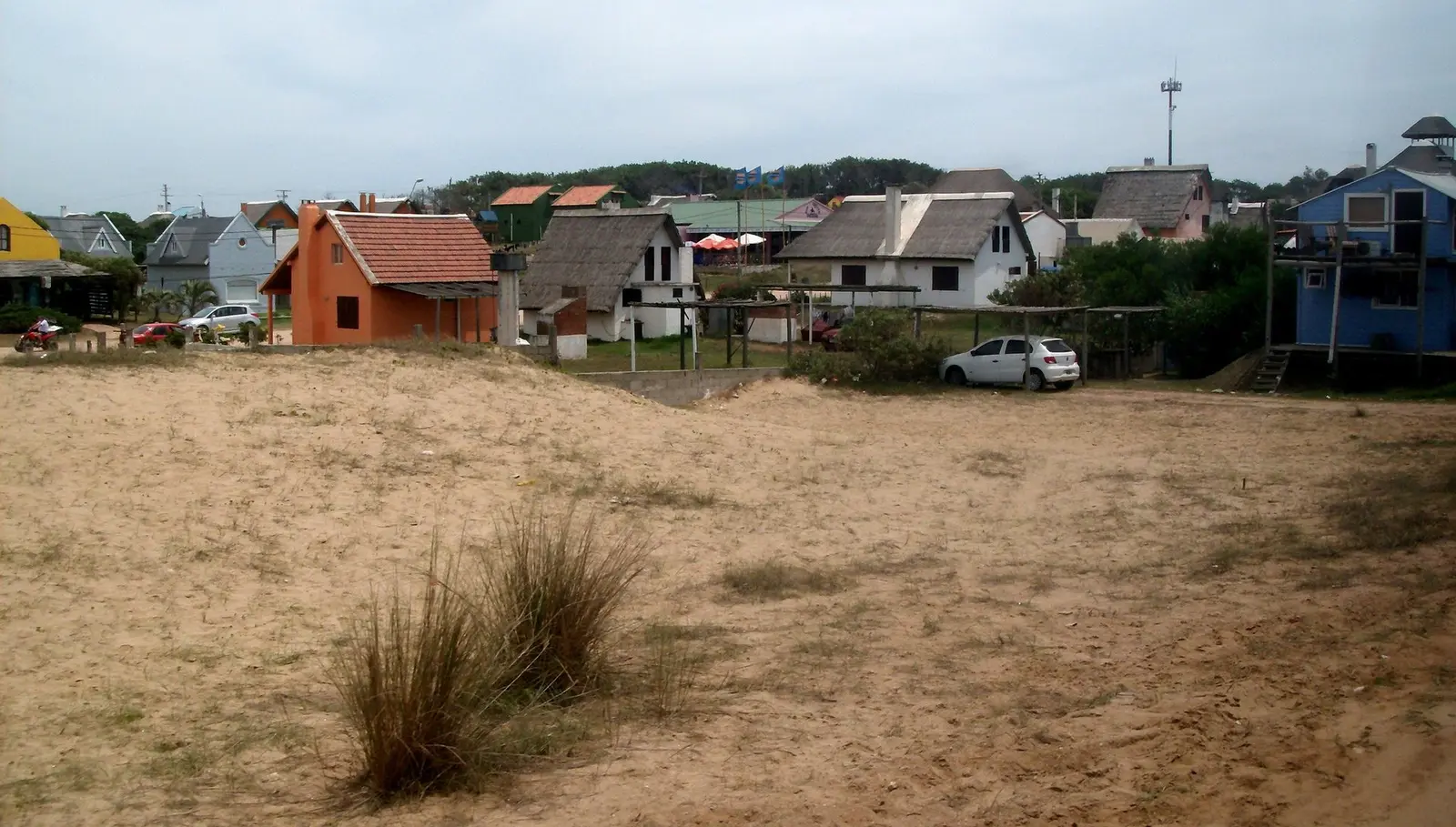
General information reviewed against official sources available as of September 26, 2026. The prices cited are listings active on that date; what each padrón allows is confirmed with the Intendencia de Rocha and, within the coastal strip, with the Ministerio de Ambiente. Cover photo: Gerardo Silveira, CC BY-SA 3.0 license, via Wikimedia Commons.