Buying a small farm in Colonia: eight checks before you pay a deposit
Short answer
In 2025 Colonia had the highest average price for farmland in Uruguay: USD 9,707/ha, against USD 4,178/ha nationwide (MGAP-DIEA, sales of 10 ha or more). Before you pay a deposit on a chacra (small farm), check eight things: land-use category, legal access, water, CONEAT, flooding and buildings, total cost, the property's status with Colonización, and the purchase structure. On rural land the law bans buildings that require urban services, and several tourist cabins can fall under that ban.
Comparing small farms in Colonia? We help you sort out what to ask for on each padrón and which technical or legal check to order first. We stay with you until the deed is signed. Message us on WhatsApp with the parcel numbers or the listings and what you plan to use the land for.
Start with the project, then the hectares
The MGAP series covers sales of 10 ha or more; it does not set the price of a small farm near Carmelo. At any price, an access route that is not in the title or a weak well changes the whole cost of the project. "Ten minutes from Carmelo" or "ideal for a vineyard" are sales descriptions you need to verify.
Decide whether you want to rest, live, farm or run a business: that tells you what water, access, power and permits you need. If you plan to grow crops, ask the agronomist to check whether the activity requires a Soil Use and Management Plan filed with the MGAP.
1. Ask for the padrón number and the land-use category
A listing may call very different properties a "chacra". Ask for the padrón (cadastral parcel number), the survey plan and the documented area. With the padrón you can find it on the rural parcel map and request the cadastral certificate, which identifies the property but does not prove boundaries on the ground, buildability or market value.
Then ask the Intendencia (departmental government) which land-use category and which planning instrument apply to that padrón. The Directrices Departamentales de Colonia, Decreto 036/2013, set the territorial framework. A property near a town does not become urban because it is close.
If the purchase depends on building several units, subdividing, setting up a tourism business or changing the use, get a formal answer on the project before you value the land as if that outcome were certain.
Ley 18.308, art. 39, protects the rural character of the land and bans buildings that require urban infrastructure and services or change that character. A house tied to farm activity and a set of tourist cabins are assessed differently. If you are offered a newly split rural plot, the minimum in Colonia is 3 ha per padrón.
2. Walk the boundaries and drive the access in bad weather
- Do you enter directly from a public road or across another property?
- Are there easements?
- Can the road take construction trucks, suppliers and an ambulance? Who maintains it?
Your escribano (notary) examines the titles and easements; a land surveyor checks the survey plan, boundary markers, area and actual occupation. A gate you can see on Google Maps does not prove a permanent right of way.
Visit in the wet season if you can, or ask for dated photos after heavy rain. A rural road that gets cut off several days a year has a practical cost that the price per hectare does not show.
3. Treat water as a condition of purchase
Ask about mains connection, well, farm pond or any other source: capacity, condition, quality and paperwork. An existing well does not mean enough flow or drinkable water. Ask for a recent test if you will drink it, and a technical check of the pump.
The Dirección Nacional de Aguas manages water use rights: depending on the works and the use, a specific application may be required. What the previous owner was authorized to do does not cover every future use.
If you want a vegetable garden, crops or animals, estimate consumption in a dry spell and the cost of storing water. If it is a second home, ask what happens to pumps and pipes while the house is closed.
4. Understand what CONEAT says and what it does not
The MGAP's CONEAT index expresses relative productive capacity for beef, sheep and wool; an index of 100 is the national average. The official lookup gives the index and the maps for each padrón.
It works as a first agronomic reading. It does not certify vineyard yield, suitability for a vegetable garden, available water, absence of erosion or permission to build.
If the farm is meant to produce, bring in an agronomist: soil groups, drainage, slopes, erosion, depth and past use, according to the crop. For a leisure purchase, which part of the land works for a house and access matters more than the average index.
5. Check flooding, buildings and electricity
The Dinagua viewer brings together flood-risk information. On rural land, add topography, runoff and local history: a plot can flood from rain or from a stream even if it does not appear on a detailed map. Ask a professional to mark the spots that work for a house, sanitation and access.
For the buildings, check plans, permits, roofs, damp, wastewater treatment and wiring. If there is no power, ask UTE for a feasibility study for the padrón:
- Less than 500 m from the grid, if you meet its requirements, UTE builds the extension at no construction cost and charges the connection fee.
- From 500 m the terms change and the works are usually paid by the applicant, under UTE's rural electrification rules.
Check mobile coverage and Antel fiber from the spot where the house would go. Sheds, tanks, fences and internal tracks also cost money to put in order.
6. Work out the full cost and the exit
Add to the price: access, fencing, water, power, sanitation, construction, upkeep and the rural contribución inmobiliaria (property tax) charged by the Intendencia de Colonia. The Intendencia processes an exemption for padrones of up to 50 ha at CONEAT index (Ley 19.355), with a form and supporting documents: ask whether the padrón has it and whether it would still apply with you as owner.
The ITP (property transfer tax) is 2% for each party, on the lower of the updated Catastro value and the price. The rest of the closing costs are covered in the costs of buying a property.
If you need to sell later, who will buy that same farm and what will they pay? Documented water, clear access, permitted buildings and a usable area that suits several kinds of buyer hold their value better than "great potential". The guide to selling a house or small farm in Colonia shows what the buyer on the other side asks for.
7. Check the padrón's status with Colonización
There are two separate controls.
- Right of first refusal (art. 35). In Colonia, article 35 of Ley 11.029 requires offering the Instituto Nacional de Colonización any land equal to or larger than the equivalent of 200 ha at CONEAT 100, and it covers other cases listed there, such as certain adjoining padrones. The INC has 20 business days to decide. Skipping the offer can make the sale null and void and trigger a fine of 25% of the Catastro value.
- Padrones in colonies (art. 70). If the padrón is part of a colony or subject to the regime, article 70 requires prior INC authorization to sell it, mortgage it, subdivide it or transfer its use; without that authorization the contract is void. It can matter even if the property is smaller than 200 ha at CONEAT 100.
Ask the escribano to check both situations before you sign a purchase promise.
8. If you buy from abroad or through a company, review the structure before you reserve
Buying rural land needs a different legal review from buying a house in town. Ley 18.092 regulates ownership of rural property and farming operations according to the buyer's structure. A Uruguayan escribano reviews the real buyer, the form of ownership, the source of funds and the requirements of the case before the reservation.
The general framework for foreigners is in the guide to real estate investment in Uruguay for foreigners and in buying in Uruguay as a foreigner. If the money comes from Argentina, see how to transfer funds to buy.
The minimum file to request before you travel
| Document or data | Question it answers | Who validates it |
|---|---|---|
| Padrón and survey plan | What land exactly is on offer? | Escribano and surveyor |
| Titles and easements | Who is selling and how do you get in legally? | Escribano |
| Land-use category and use inquiry | What project can be approved? | Intendencia and a professional |
| Water, tests and paperwork | Is there enough, and is it fit for the intended use? | Water specialist and Dinagua |
| CONEAT and soil analysis | How suitable is it for farming? | Agronomist |
| Building plans and permits | What is approved and what is missing? | Professional, Intendencia and escribano |
| Status with the INC | Does it have to be offered, or is authorization needed? | Escribano |
| Budget to make it usable | What does it cost to live or work there? | Suppliers and professionals |
Frequently asked questions
How much does a hectare cost in Colonia?
According to MGAP-DIEA, rural sales in Colonia averaged USD 9,707 per hectare in 2025, the highest in the country, against USD 4,178/ha nationwide. Next came Soriano (USD 7,964) and San José (USD 6,842). The series only records sales of 10 ha or more, so a small farm near Carmelo or Colonia del Sacramento needs its own comparables.
Can I buy a small farm in Colonia and build several cabins?
Do not assume you can. On rural land, article 39 of Ley 18.308 bans buildings that create a need for urban infrastructure and services or change the rural character, and several tourist cabins can fall under that restriction. Submit the project to the Intendencia de Colonia before you buy; to run lodging you also need registration with the Ministerio de Turismo.
What is the minimum area to subdivide rural land in Colonia?
Three hectares per padrón. That is the minimum for rural subdivisions in Montevideo, Canelones, Colonia, San José and Maldonado, according to the official procedure for subdividing rural padrones. Even if the plot meets that minimum, what you can build depends on the land-use category and the planning instrument that applies to the padrón.
Does a high CONEAT score guarantee the farm is good for production?
No. CONEAT measures relative productive capacity for beef, sheep and wool, with 100 as the national average. It says nothing about available water, drainage, soil depth, erosion or past management, and it does not assess vineyards or vegetable growing. For a specific crop you need an agronomist to walk the padrón and, where relevant, a soil test.
Can a foreigner buy rural land in Uruguay?
Yes. A foreign individual can buy rural land; nationality alone does not prevent it. If the purchase goes through a company or another structure, Ley 18.092 requires a review of the form of ownership and its exceptions. Ask a Uruguayan escribano to check your case and the padrón's status with Colonización before you reserve.
Read next:
- Selling a house or small farm in Colonia
- Carmelo or Nueva Helvecia: where to buy a house
- Buying a house in Colonia del Sacramento
- Colonia parcel finder
Sources
- MGAP-DIEA, land sales 2025 and DIEA methodology (10 ha or more)
- MGAP, CONEAT lookup and Soil Use and Management Plans
- Junta Departamental de Colonia, Directrices Departamentales (Decreto 036/2013)
- Intendencia de Colonia, rural property tax
- IMPO: Ley 18.308, art. 39, Ley 11.029, arts. 35 and 70, Ley 18.092, Title 19 (ITP)
- Subdivision of rural padrones
- Dinagua: water use rights and flooding
- UTE, rural electrification
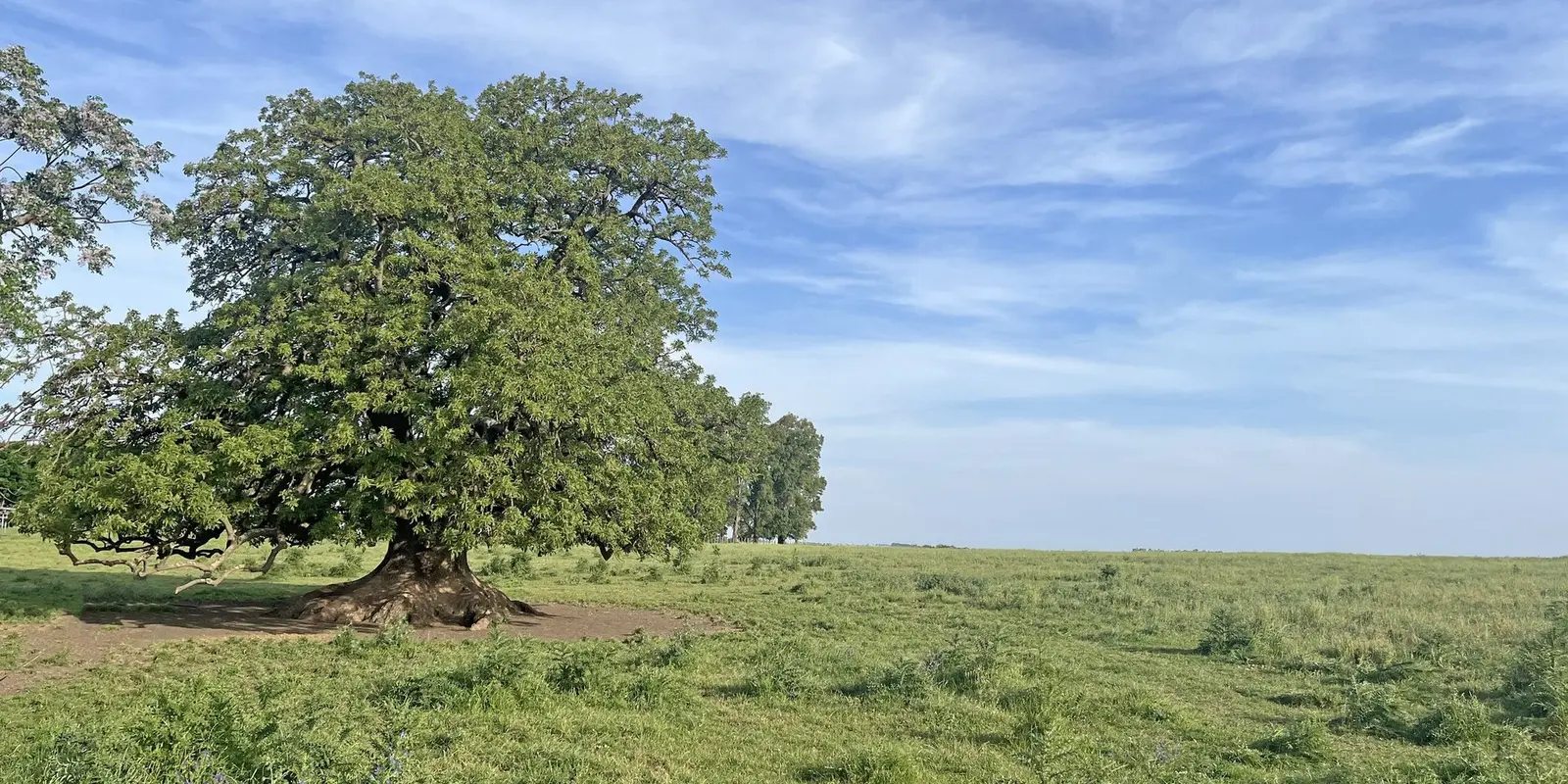
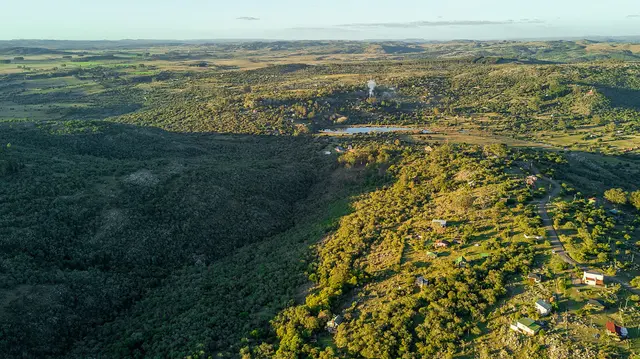
General information checked against official sources available as of September 26, 2026. Land-use category, permits, water and status with Colonización must be confirmed for each padrón with the Intendencia, the relevant agencies and your escribano. Cover photo: Charles J. Sharp, license CC BY-SA 4.0, via Wikimedia Commons.
,_Colonia,_Uruguay.jpg)